2026 Best Hands On STEM Projects for Schools?

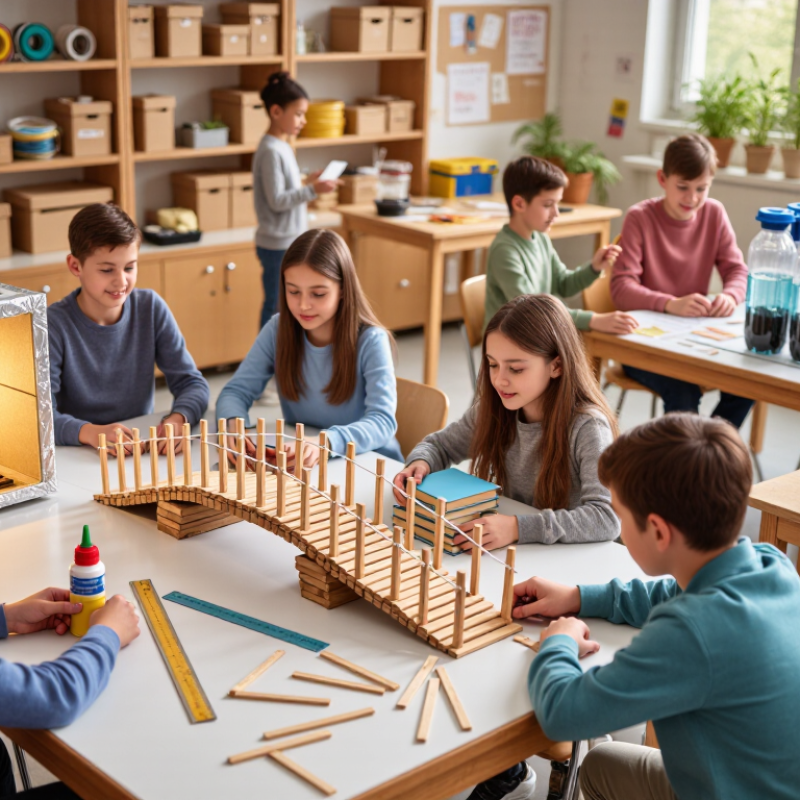
Schools need STEM learning that feels practical, purposeful, and connected to everyday life. Hands on STEM projects can turn a quiet classroom into a working design studio, where students measure, build, test, and revise. A bridge made from craft sticks may hold only a few textbooks, yet it can reveal important lessons about force, structure, teamwork, and failure. Small solar ovens, water filters, coding challenges, and sensor-based garden systems can also connect science concepts with visible results.

This guide explores the 2026 best Hands on STEM projects for schools, with attention to age suitability, classroom safety, cost, accessibility, and learning outcomes. Each idea should support clear curriculum goals rather than become an entertaining activity without direction. Teachers can strengthen results by asking students to record predictions, explain design choices, and compare their first model with the final version. Let students test. Real classrooms are messy. Materials break, instructions may confuse learners, and some projects require more time than expected. That is not always a weakness. Careful reflection can reveal better teaching decisions and more inclusive designs. However, educators should still use reliable scientific sources, age-appropriate equipment, and documented risk assessments. Project quality depends on guidance, not expensive technology. With thoughtful planning, these activities can build communication, problem-solving, creativity, and confidence while giving students evidence that their ideas can change the physical world.
2026 Best Hands On STEM Projects for Schools?

What Makes a Hands-On STEM Project Effective in 2026

An effective hands-on STEM project in 2026 should begin with a real problem, not a decorative gadget. Students might investigate classroom energy use, soil moisture, or indoor air quality. They collect measurements, question patterns, and propose practical changes. The project should connect science concepts with mathematics, engineering, and clear communication. It should also allow more than one reasonable solution.

Reliable evidence matters. Students need simple testing procedures, labeled data tables, and repeated trials. Teachers can guide them toward public scientific sources and age-appropriate safety standards. A successful project makes learning visible through sketches, prototypes, failed tests, and revised explanations. Short reflection notes can reveal whether students understand the process or merely followed instructions. That difference is important.

Accessibility should be designed from the beginning. Materials must support different physical abilities, language levels, and confidence levels. Group roles can rotate between builder, recorder, tester, and presenter. Digital tools may help analyze data, but they should not replace observation or judgment. Sometimes the first design will be weak. Good teaching leaves room for that. A leaking model, unstable bridge, or confusing graph can become valuable evidence. Teachers should document what worked, what failed, and what they would change before teaching the project again. Students deserve honest examples of improvement, not perfect demonstrations.

How to Choose Projects for Different School Age Groups

2026 Best Hands-On STEM Projects for Schools

Choosing a STEM project by age matters more than choosing the newest idea. Younger pupils need visible results, short tasks, and safe materials. A paper bridge, seed-growing investigation, or shadow clock can build observation skills. Keep instructions simple. Let children predict before testing.

For middle school students, projects should include measurement, revision, and teamwork. A water-filter model, solar oven, or sensor-based weather station creates useful problems. Students can record temperature, compare designs, and explain unexpected results. OECD’s PISA 2022 findings link stronger science engagement with greater confidence and interest in science-related futures. Yet a perfect model is not the goal. A failed filter may teach more than a successful one.

Secondary students need authentic constraints. Ask them to design a low-energy classroom, test materials, or analyze local air-quality data. The World Economic Forum’s Future of Jobs Report 2025 identifies analytical thinking as a leading workplace skill, while creative thinking continues to grow in importance. Projects should therefore require evidence, not decoration. Teachers should assess the process, including flawed assumptions and improved attempts.

Tips: Match the challenge to students’ reading and motor skills. Provide choices, but limit the materials. Use a simple rubric for evidence, teamwork, and reflection. Check safety before every test. Some projects will fail. Plan time for redesign.

2026 Best Hands-On STEM Projects for Schools? – How to Choose Projects for Different School Age Groups

Suggested school-based projects organized by developmental readiness, learning goals, resources, and classroom practicality.
Age Group Hands-On Project Primary STEM Concepts Recommended Group Size Typical Duration Materials and Equipment Expected Student Outcomes Difficulty Safety and Teacher Considerations Assessment Evidence
Ages 5–6
Grades K–1
Paper Bridge Challenge
Students design and test a paper bridge that spans two desks or books and supports small classroom objects.
Forces Structures Counting Measurement Pairs or groups of 3 45–60 minutes Paper, index cards, masking tape, books or blocks, small counters, rulers, recording sheets Students identify stable shapes, make a simple prediction, compare loads, and describe how a design can be improved. Beginner Use lightweight test objects. Keep bridges low and provide clear boundaries for movement around desks. Design sketch, prediction, number of objects supported, and a short explanation of one design change.
Ages 6–7
Grades 1–2
Seed Germination Investigation
Students observe how water, light, and temperature influence the early growth of seeds.
Life Science Observation Variables Data Recording Pairs 10–14 days with 10-minute daily observations Fast-germinating seeds, transparent containers, paper towels or soil, water, rulers, labels, observation journals Students distinguish observations from guesses, measure growth, identify a test variable, and represent results with drawings or a basic chart. Beginner Wash hands after handling soil. Avoid moldy samples and dispose of plant material according to school procedures. Observation journal, labeled measurements, growth chart, and evidence-based conclusion.
Ages 7–8
Grades 2–3
Wind-Powered Sail Car
Students build a lightweight vehicle that moves when air from a fan pushes against a sail.
Motion Energy Design Fair Testing Groups of 3–4 2 class periods of 45–60 minutes Cardboard, paper, straws, wooden craft sticks, bottle caps, skewers with blunt ends, tape, rulers, electric fan Students connect wheel design and sail area with movement, control one variable during testing, and use distance data to refine a prototype. Beginner–Intermediate Use blunt or covered axle ends. Secure loose parts and keep fingers away from moving fan blades. Prototype plan, controlled test results, distance comparison, and documented redesign.
Ages 8–10
Grades 3–5
Water Filtration Model
Students create a model filter and compare how different layers affect the clarity of muddy water.
Earth Science Materials Systems Data Analysis Groups of 3–4 2–3 class periods Cut plastic bottles prepared by an adult, gravel, sand, cotton or cloth, containers, muddy water, measuring cups, turbidity comparison chart Students explain filtration as a physical separation process, compare filter media, record results, and recognize that clear water is not necessarily safe to drink. Intermediate Filtered water must not be consumed. Adults should prepare containers with sharp edges removed or covered. Layer diagram, volume measurements, visual clarity rating, results table, and written limitation of the model.
Ages 9–11
Grades 4–5
Solar Oven Design
Students design an insulated solar oven and investigate how orientation, reflectors, and insulation affect internal temperature.
Solar Energy Heat Transfer Insulation Optimization Groups of 3–4 2–3 class periods plus outdoor testing Pizza boxes or cardboard boxes, aluminum foil, clear plastic film, black paper, newspaper, tape, thermometers, timer Students describe radiant energy and insulation, collect temperature readings over time, compare designs, and explain factors that affect performance. Intermediate Do not place hands or faces near concentrated reflected sunlight. Use food only if the teacher verifies safe temperatures and materials. Annotated design, temperature-time graph, controlled comparison, and improvement proposal.
Ages 11–13
Grades 6–8
Earthquake-Resistant Tower
Students construct a tower and test its stability on a manually moved or low-power shake platform.
Engineering Design Structures Vibration Constraints Groups of 3–4 3–4 class periods Wooden craft sticks, paper straws, tape, clay or reusable putty, cardboard base, ruler, weights, simple shake platform Students analyze structural failure, apply bracing concepts, work within height and material constraints, and justify design decisions with test evidence. Intermediate–Advanced Keep towers below the approved height. Use small weights and a stable testing area to reduce falling-object risks. Constraint checklist, stability score, failure analysis, iteration log, and engineering rationale.
Ages 12–14
Grades 7–8
Microclimate Mapping
Students measure temperature, humidity, light, or wind differences across school locations and create a local environmental map.
Environmental Science Sensors Statistics Spatial Reasoning Groups of 3–5 1–2 weeks Thermometers or digital sensors, light meters if available, clipboards, school map, spreadsheet software, measuring tape Students define sampling locations, maintain consistent measurement procedures, calculate averages and ranges, and interpret environmental patterns. Intermediate–Advanced Follow school rules for outdoor movement. Avoid collecting measurements near traffic, unsafe surfaces, or restricted areas. Sampling plan, organized data set, map or visualization, uncertainty discussion, and evidence-based recommendation.
Ages 14–18
Grades 9–12
Automated Plant-Watering System
Students build and program a sensor-based system that monitors soil moisture and controls a small water pump or indicator.
Programming Sensors Control Systems Data Logging Groups of 3–4 3–5 class periods Low-voltage microcontroller, soil-moisture sensor, small pump or LED indicator, tubing, battery pack, container, plant, jumper wires Students interpret sensor readings, create threshold-based logic, calibrate a system, evaluate reliability, and discuss water conservation and system limitations. Advanced Use low-voltage equipment only. Keep electronics away from water, inspect connections, and provide direct supervision during testing. Circuit or system diagram, commented program, calibration data, performance test, and technical reflection.
Ages 15–18
Grades 10–12
Water-Quality Data Study
Students investigate selected physical and chemical indicators in local water samples and communicate findings without claiming medical or regulatory conclusions.
Chemistry Ecology Sampling Data Interpretation Groups of 3–4 2–4 weeks Teacher-approved water-test materials, sample containers, gloves, pH strips or meter, thermometer, turbidity materials, spreadsheet software Students develop a sampling protocol, distinguish measured indicators from conclusions, calculate variation, identify limitations, and present findings responsibly. Advanced Do not taste or culture samples. Wear appropriate protective equipment, label samples clearly, and follow local disposal and fieldwork rules. Research question, sampling protocol, quality-controlled data table, graphs, limitations, and evidence-based presentation.
Selection guideline: Choose projects by matching the level of abstraction, measurement demands, reading load, tool requirements, and safety needs to students’ developmental readiness. For every age group, allow students to predict, test, record evidence, revise a design, and explain the reasoning behind their conclusions.

Core Materials, Safety Rules, and Classroom Preparation

Hands-on STEM projects succeed when core materials are simple, visible, and easy to replace. A practical classroom kit may include goggles, cardboard, craft sticks, tape, rulers, trays, batteries, insulated wires, and low-voltage motors. Avoid fragile parts when possible. Students learn more when they can rebuild quickly.

The Education Endowment Foundation’s 2021 Teaching and Learning Toolkit estimates that collaborative learning can add five months of academic progress. That finding supports shared material stations and small design teams. Each station should have a labeled tray, an inventory card, and one tested example. Keep instructions short. Add pictures for younger learners.

Safety preparation must happen before students enter the room. Complete a project-specific risk assessment, check wires for damage, and keep liquids away from electrical supplies. Provide eye protection during cutting, drilling, or launching activities. OSHA’s Hazard Communication guidance requires accessible safety information, labels, and training when hazardous materials are present. For most school projects, safer substitutions are better than complicated chemical demonstrations. I still underestimate cleanup time. Ten extra minutes can prevent rushed handling and misplaced tools. Store unfinished models on flat shelves, not crowded desks. Record what failed, too. That evidence improves the next lesson.

Step-by-Step Project Ideas for Science, Technology, Engineering, and Math

2026 Best Hands On STEM Projects for Schools?

Step-by-Step Project Ideas for Science, Technology, Engineering, and Math

A strong STEM project begins with a visible problem. Students can test how sunlight changes water temperature. Place identical cups in shade, sunlight, and behind clear plastic. Record temperatures every ten minutes for one hour. Keep the water volume and starting temperature consistent. Students then create a simple table and explain unexpected results. Cloud cover may disrupt the pattern. That is useful evidence, not a mistake to hide.

For technology and engineering, build a small bridge from paper strips and tape. Students sketch three designs before choosing one. They measure span length, estimate load capacity, and test the bridge with coins. Add one structural change at a time. A wider base may help, but extra material can increase weight. Students can use a spreadsheet to compare predictions with results. Many designs will fail early. That failure gives the class something concrete to inspect.

A math project can examine school cafeteria waste. Teams weigh discarded food for five school days, using the same scale and recording method. They calculate daily means, identify unusual values, and display results in a bar graph. Students can propose one change, such as smaller portions or clearer sorting signs. The data may be incomplete. Students should state that limitation clearly. Teachers can check measurements, protect student privacy, and repeat trials before making claims.

How Schools Can Assess Learning and Improve Future STEM Projects

Hands-On STEM Projects: Assessing Learning and Improving Future Work

A successful STEM project should reveal how students think, not only what they build. Teachers can assess learning through design journals, prototype changes, and short student explanations. A strong bridge may look impressive, yet the reasoning behind it matters more. Ask students what failed, why they changed materials, and what evidence supports their decisions. Their answers often expose deeper understanding than a polished final model.

Use a simple rubric with criteria for investigation, collaboration, technical accuracy, communication, and reflection. Keep each criterion observable. For example, “tests two design ideas” is clearer than “shows creativity.” During classroom trials, teachers can record brief notes about teamwork, measurement habits, and problem-solving choices. Student self-assessments add useful evidence, although they are not always accurate. Some students overrate quiet participation. Others overlook real progress.

After each project, staff should review the evidence together. Which instructions caused confusion? Did limited tools restrict experimentation? Were the deadlines realistic? A teacher may discover that the assessment rewarded neat construction more than scientific reasoning. That is a useful flaw to confront. Future projects can include earlier testing, clearer material limits, and time for redesign. Invite students to suggest one improvement. Their practical experience can expose weaknesses adults miss. Keep the changes small, measurable, and connected to observed learning.