
7 Best Memory Foam Core Pillow Filling Machines for Buyers
Memory foam pillows look simple on a showroom shelf. Their cores are not. Foam density, cut size, feed consistency, and filling speed all affect the finished product. For buyers comparing a Memory Foam Core Pillow Filling Machine, the real question is whether it handles their foam reliably, not merely whether its brochure promises high output.
Market context helps explain the investment. Grand View Research’s Global Mattress Market report estimated the market at USD 50.61 billion in 2023 and projected a 7.2% compound annual growth rate from 2024 to 2030. This figure covers mattresses, not pillow-filling equipment, so it should not be treated as a direct measure of machine demand. Meanwhile, the International Sleep Products Association’s Bedding Market Quarterly tracks changes in bedding shipments and wholesale activity. Together, these sources offer useful context, but neither replaces a production-line test.
Details matter. Ask suppliers about foam types, filling accuracy, changeover time, dust control, and operator access. Request a demonstration using your own foam pieces; small, irregular scraps can behave differently from clean sample material. Then compare maintenance needs, available service, and realistic cycle rates. No machine is perfect. A fast unit may still create uneven cores or require frequent adjustment. The seven options in this guide are assessed through practical buyer considerations, while recognizing that the best fit depends on your product, output target, and factory layout. One caveat remains: published market reports rarely measure this machinery category on its own.
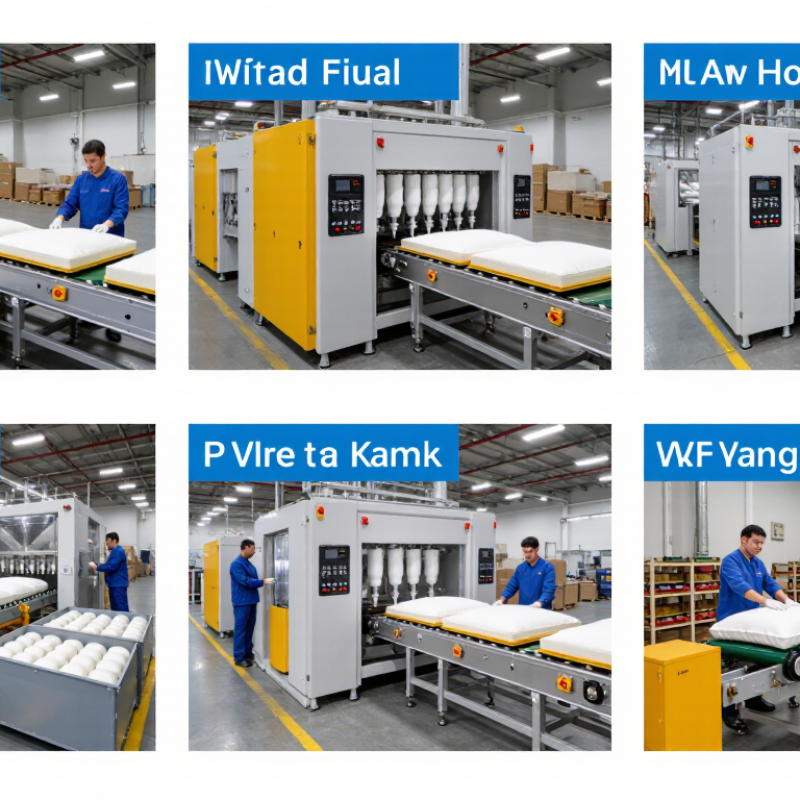
What Memory Foam Core Pillow Filling Machines Do
Memory foam core pillow filling machines move foam into pillow covers with controlled speed and volume. The exact setup depends on the core: some machines place a pre-shaped foam insert, while others feed shredded foam through a hopper and filling nozzle. They are not interchangeable.
For loose-fill systems, foam pieces enter a hopper, where an agitator helps keep material moving. A metering unit weighs or measures each portion before air or mechanical pressure carries it into the cover. The operator positions the opening over the nozzle, starts the cycle, then removes the filled pillow for closing. Some equipment also supports dust extraction, which helps keep the work area cleaner.
Small details matter. Foam pieces that are too large may bridge inside the hopper; very fine pieces can create more dust. A consistent fill weight can improve pillow shape, but it does not guarantee the same feel if foam density or piece size varies. Test with the actual cover and foam before setting production speeds. It takes time. I would also check how easily the nozzle and hopper can be cleaned, because leftover fragments may affect later batches.
| Machine configuration | How it works | Suitable filling material | Best fit | Key buyer check |
|---|---|---|---|---|
| 1. Pneumatic foam-filling machine | Uses an air stream to convey loose filling through a hose and nozzle into an opened pillow shell. | Shredded or chopped memory foam, subject to the machine’s feed and hose design. | Production that needs flexible hose access to pillow shells. | Check the accepted piece size, hose diameter, dust control, and how easily operators can control fill quantity. |
| 2. Auger-fed filling machine | A rotating screw moves loose material from a hopper toward the filling outlet. | Loose foam pieces that can pass through the feeder without excessive bridging or compression. | Setups where controlled mechanical feeding is preferred over air conveying. | Test the actual foam pieces: irregular shapes can feed unevenly, and excessive screw pressure may compact the material. |
| 3. Volumetric hopper filler | Dispenses a preset volume of filling, often using a measured chamber or timed feed cycle. | Loose fill with reasonably consistent flow and piece distribution. | Buyers prioritizing repeatable fill volume and straightforward operation. | Volume is not the same as weight; changes in foam density or packing can change the mass delivered. |
| 4. Weigh-and-fill machine | Measures a target quantity by weight before or during delivery to the pillow shell. | Foam fill that can be fed consistently to the weighing system. | Products sold or specified by fill weight, where weight consistency matters. | Ask how the system handles lightweight, irregular foam pieces and how weighing accuracy is verified. |
| 5. Single-nozzle semi-automatic filler | An operator positions and holds the pillow shell while the machine feeds filling through one nozzle. | Loose shredded or chopped foam compatible with the selected feeding mechanism. | Small production runs, varied pillow sizes, or operations that need a compact setup. | Consider operator workload, nozzle access, shell handling, and how fill settings are adjusted between products. |
| 6. Multi-nozzle or multi-station filler | Provides more than one filling position or nozzle so operators can fill multiple shells or work through separate stations. | Materials that can be distributed reliably to each outlet. | Higher-throughput work where several filling positions can be staffed and supplied. | Confirm that feed distribution is balanced and that each station can be cleaned and serviced easily. |
| 7. Integrated shredding and filling line | Combines foam size reduction with transfer and filling equipment; the exact layout depends on the incoming material and production process. | Suitable foam offcuts or foam stock that the shredder is designed to process. | Facilities that need to prepare foam pieces in-house before filling pillow shells. | Check shred size, feed compatibility, guarding, dust management, and whether the line can be cleaned between materials. |
| Buying note: Equipment capabilities vary by design. Before purchase, test the intended memory foam pieces and pillow shells, and confirm fill consistency, cleaning requirements, operator safety, and available service support. | ||||