BirdBrain is part of the CreXo family of brands!
Learn MoreBirdBrain is part of the CreXo family of brands!
Learn MoreChildren do not need expensive kits to explore big ideas. Creative learning activities turn ordinary materials into chances to imagine, test, and explain. A cereal box can become a puppet stage; a bowl of water can invite predictions about which objects will float. These playful tasks connect making with thinking. They also give children room to ask questions and try again.
The best activity is often simple, flexible, and suited to a child’s age and interests. Try building a bridge from paper strips, then add coins one at a time to see what changes. Or ask a child to draw a map of the route from the kitchen to the front door, adding landmarks from memory. Keep supplies safe and easy to handle, and offer guidance without taking over. A few open-ended questions can help: “What might happen if you change this?” or “How could you test your idea?”
Not every project goes smoothly. That is part of learning. A tower may lean, paint may mix into an unexpected color, and a child may lose interest halfway through. Adults can treat these moments as useful clues, not failures, and adjust the challenge or take a break. There is no single perfect method. By noticing what captures a child’s attention and making space for experimentation, families and educators can support creativity, communication, and problem-solving in everyday life.
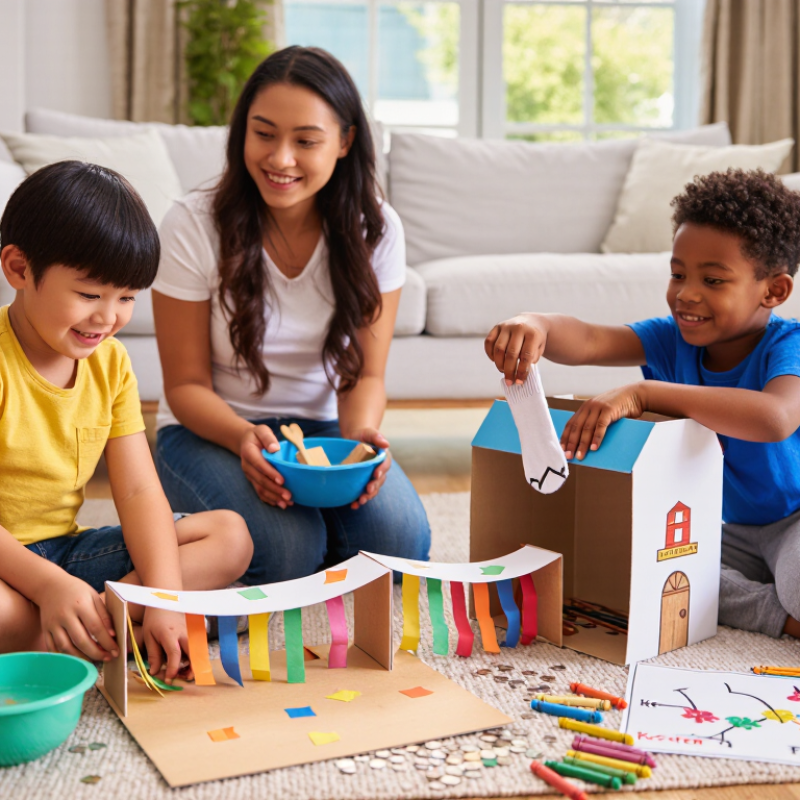
Creative learning activities are hands-on experiences that let children explore ideas, make choices, and show what they understand. They combine imagination with skills such as counting, storytelling, problem-solving, and noticing patterns. The goal is not a perfect craft or one correct answer. It is the thinking children practice while making something.
A cardboard box can become a small shop, spaceship, or animal shelter. As children draw signs, sort pretend goods, and decide what each object costs, they practice language, early math, and planning.
A bowl of water, a spoon, and a few safe household objects can invite predictions about what floats. Ask, “What do you think will happen?” Then let the child test it and describe what changed. Then wait. Keep materials age-appropriate, supervise tools and small objects, and adapt the activity to the child’s abilities.
Some days, a child may abandon the plan and cover the paper in blue circles. That can still be meaningful. Notice their choices, ask open questions, and give them time to explain. Adults do not need to correct every surprising result.
A little mess is normal. Let them wonder. If an activity feels frustrating, simplify one step or pause; creative learning should leave room for curiosity, not pressure.
Common Types of Creative Learning Activities
Creative learning can take many forms. In art activities, children might mix paint, shape clay, or build collages from paper scraps. These tasks invite experimentation with color, texture, and design. Storytelling offers another route: a child can invent characters, arrange picture cards, or change the ending of a familiar tale. There is no single right result. The process matters as much as the finished work.
Building activities use blocks, recycled boxes, or safe household materials to explore balance and problem-solving. Music and movement can develop rhythm and body awareness; children might tap a steady beat or invent motions for a song. Nature activities add close observation. A child could compare leaves, sketch their shapes, and ask why they differ. Adults can support learning by asking open questions instead of taking over. Still, some projects become messy or lose a child’s interest. That is useful information, too.
Tips: Offer a few materials, then let children choose. Keep tools age-appropriate and supervise activities involving small pieces or scissors. Praise specific effort, such as trying a new pattern, rather than calling every result perfect. Notice what holds a child’s attention, and adjust the next activity accordingly.
Common types include art, building, storytelling, and music or movement. This example 30-minute activity plan shows how time could be divided among them; it is an illustrative schedule, not survey data.
Example session total: 30 minutes. Adjust the activities and timing to suit each child’s interests and needs.
Creative activities support children’s development by giving them room to make choices and test ideas. When a child cuts paper for a collage, they practise hand control and coordination. Choosing colors or arranging shapes also invites planning.
Small choices matter. A cardboard box might become a bus, a shop, or nothing at all; deciding what happens next exercises imagination and flexible thinking.
Making things together can build language and social skills. A child describing a clay animal learns to explain an idea, while a sibling may suggest a different tail. Taking turns with the scissors offers practice in patience and cooperation. Feelings can surface, too. A drawing that “went wrong” gives an adult a chance to help a child name frustration and try another approach, without insisting that every project must look a certain way.
The most useful activity is not always the neatest or most elaborate. A tray of paper scraps, washable paint, and a few minutes of unhurried attention may be enough. Some children prefer building; others would rather watch before joining in. Adults can offer safe materials and gentle prompts, then leave space for children to lead. It can feel tempting to fix the crooked tower. Letting it lean may teach more.
Creative learning works best when an activity fits a child’s age, interests, and abilities. Choose materials they can handle safely and use with growing independence. For toddlers, try chunky crayons, washable paint, or blocks with varied shapes. Keep it simple. Offer one or two choices, and let them explore without expecting a finished picture. Preschoolers may enjoy paper puppets, pretend shops, or sorting natural objects by color and size. Older children can plan a simple model, invent a board game, or write and illustrate a short story.
Age is only a starting point. A child who finds scissors difficult might tear paper or use pre-cut shapes instead. For children sensitive to noise or messy textures, try quiet drawing, dry collage materials, or a small, predictable workspace. Offer tools that support access, such as larger handles or a low table, when useful. Notice what holds the child’s attention, and adjust the challenge gradually. An activity should invite effort, not create a test. Give enough time for pauses and unexpected ideas. It is tempting to plan every step, but children may learn more when adults leave room for their own choices. Still, some activities need closer supervision, especially when small pieces or wet materials are involved.
| Age Range | Creative Activity | What Children Can Practise | Ways to Adapt for Different Needs | Materials and Adult Support |
|---|---|---|---|---|
| Ages 1–2 | Explore a sensory basket with safe, familiar objects of different textures, shapes, and sizes. | Curiosity, sensory exploration, early language, and hand-eye coordination. | Offer a few objects at a time; choose large, washable items without small parts. Let children explore by looking, touching, or listening rather than requiring a particular response. | Use age-appropriate household objects under close adult supervision. Name what the child notices and follow their pace. |
| Ages 2–3 | Make pictures with chunky crayons, large paper, and simple stamps. | Mark-making, colour recognition, imagination, and early fine-motor practice. | Use easy-grip tools, tape the paper to the table, or offer a larger surface. Children can point to colours or choose materials if holding a crayon is difficult. | Provide non-toxic, age-appropriate supplies and supervise use. Focus on exploring marks, not making a finished picture. |
| Ages 3–5 | Build a pretend-play setting, such as a shop, garden, or animal clinic, with open-ended props. | Storytelling, vocabulary, social interaction, problem-solving, and imaginative thinking. | Use picture cards or simple choices to support communication. Offer a quieter play area, familiar roles, or a partner for children who prefer less group interaction. | Try boxes, fabric, toy figures, and drawing materials. Join the play when invited and ask open-ended questions without directing the story. |
| Ages 6–8 | Design and build a bridge or tower from recycled cardboard, paper, and tape. | Planning, creativity, early engineering ideas, persistence, and testing solutions. | Show a visual sequence of steps, provide pre-cut pieces if needed, or allow a spoken or drawn design instead of written instructions. Let children work alone or with a partner. | Use clean materials and child-safe scissors with supervision. Invite children to test, adjust, and explain what they changed. |
| Ages 9–12 | Create a short comic, stop-motion story, or illustrated guide about a topic the child enjoys. | Narrative structure, visual communication, sequencing, planning, and digital or artistic skills. | Offer choices of drawing, typing, voice recording, or working with a partner. Break the project into manageable stages and provide templates when helpful. | Use paper and pencils or a suitable device. Agree on screen-use and privacy rules before recording or sharing work. |
| Across ages | Make a collaborative mural or shared story, with each child contributing an idea or section. | Cooperation, self-expression, listening, and respect for different ideas. | Allow children to contribute by drawing, choosing images, dictating words, using assistive tools, or observing before joining. Keep participation voluntary and provide a quieter alternative. | Choose a comfortable workspace and materials suited to the children taking part. Celebrate effort and ideas rather than comparing finished work. |
A supportive learning environment gives children room to explore without making every activity feel like a test. Set out a few inviting materials, such as paper, washable paint, cardboard tubes, and child-safe scissors. A small tray keeps supplies easy to reach and limits clutter. When children can choose what to use, they often stay engaged longer. Keep routines predictable, too: a clear place for supplies and a simple cleanup cue help children feel secure. It gets messy. That is part of learning, not a sign that the activity has failed.
Notice effort and curiosity, not just the finished picture. Instead of correcting a wobbly paper bridge, ask, “What do you think would help it hold more blocks?” Give children time to answer, and let them change their plan. Offer choices without taking over. A quiet corner can help a child who needs a break, while a shared table invites conversation. Adults can interrupt too quickly; I sometimes have to pause before offering a solution. Children need room to struggle safely and ask for help.
Tips: Keep materials within reach, show one simple example, then step back. Praise specific effort, such as trying a new shape. Ask before helping, and accept that the result may surprise you.
To provide the best experiences, we use cookies to store and/or access device information. Consenting to these technologies will allow us to process data such as browsing behavior or unique IDs on this site. Not consenting or withdrawing consent, may adversely affect certain features and functions.