
Top 10 HPLC Column Types for Global Buyers?

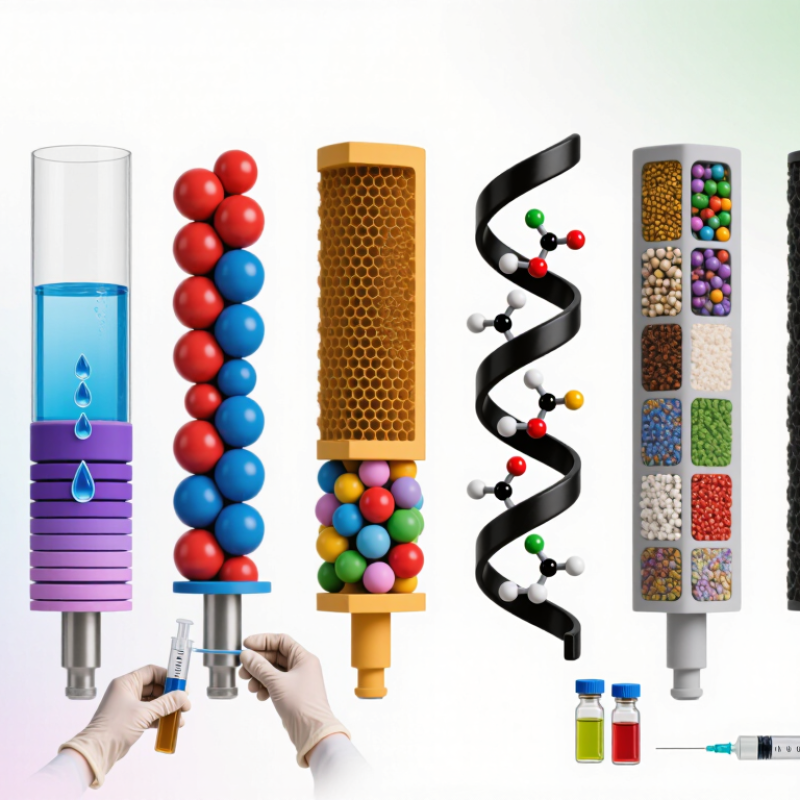
Choosing the right HPLC Column can determine whether a laboratory gains a clean peak or repeats an entire batch. Global buyers face many options, including reversed-phase, normal-phase, HILIC, ion-exchange, size-exclusion, chiral, affinity, mixed-mode, porous graphitic carbon, and monolithic columns. Each type responds differently to polarity, charge, molecular size, or stereochemistry.

John W. Dolan, a respected HPLC educator, has emphasized a practical principle: “The best column is the one that gives the required separation, robustness, and reproducibility.” That idea matters when comparing suppliers across regions. A buyer should examine stationary-phase chemistry, particle size, pore diameter, column dimensions, pH range, pressure limits, and temperature stability. A 150 × 4.6 mm column with 5 µm particles may suit routine quality control. A 100 × 2.1 mm column with smaller particles may reduce solvent use and analysis time.

Performance data should not be accepted blindly. Request chromatograms, batch information, certificates, and application notes using similar sample matrices. Check whether the manufacturer supports method transfer and replacement availability. Delivery delays can disrupt production.

There is no universal winner.

Cost also deserves careful thought. A cheaper HPLC Column may create higher expenses through poor peak shape, frequent cleaning, or shortened lifetime. Yet premium pricing does not guarantee success. This guide compares ten major column types through practical selection criteria, not marketing language. Some recommendations may still require testing. Real samples are often less cooperative than standards.
Top 10 HPLC Column Types for Global Buyers?

HPLC Column Fundamentals: 400–1,200 bar and 1.7–10 µm Particles

Top 10 HPLC Column Types for Global Buyers

HPLC column selection begins with pressure and particle size. Conventional systems commonly operate near 400–600 bar, while UHPLC platforms may reach 1,200 bar. Pressure matters. A column rated below the instrument’s operating range can create safety and performance concerns.

Particle sizes from 1.7 to 10 µm offer different trade-offs. Smaller particles often improve efficiency and sharpen peaks, but they can increase backpressure quickly. A 1.7 µm column may suit fast UHPLC methods, while 5 or 10 µm particles can provide steadier operation on older systems.

Fit the system. Tubing volume, temperature, and mobile-phase viscosity also affect pressure.

Reversed-phase columns remain common for nonpolar and moderately polar compounds. HILIC columns support highly polar analytes, while ion-exchange columns separate charged species. Size-exclusion columns focus on molecular size, and chiral columns distinguish optical isomers. Normal-phase, mixed-mode, and porous graphitic columns solve more specialized problems.

In practical method development, selecting the smallest particle is not always the best decision. I have seen excellent peak shapes become unusable when pressure fluctuated during long sequences. That shortcut fails. Buyers should verify pore structure, dimensions, pressure limits, chemical compatibility, and stated testing conditions. Specifications can look comparable, yet different instruments may produce different results. A modest particle size, stable temperature, and carefully controlled flow rate often deliver more reliable data than maximum speed.

Classifying Columns by USP L Codes, Stationary Phase, and Selectivity

Top 10 HPLC Column Types for Global Buyers?

Classifying Columns by USP L Codes, Stationary Phase, and Selectivity

Global buyers should classify HPLC columns by chemistry, not appearance. Common choices include C18, C8, phenyl, cyano, pentafluorophenyl, HILIC, ion-exchange, size-exclusion, mixed-mode, and chiral columns. Each type creates a different retention pattern. C18 often supports reversed-phase methods, while C8 can reduce retention for strongly hydrophobic compounds. Phenyl and pentafluorophenyl phases may improve aromatic or positional selectivity. HILIC favors polar analytes under high-organic conditions.

USP L codes provide a useful technical language. Codes such as L1, L7, L8, L9, and L10 help describe recognized stationary-phase families. However, one code does not guarantee identical performance. Surface coverage, pore size, particle structure, and endcapping can change peak shape and retention. Verify the technical specification.

Selectivity deserves careful attention. Two columns with similar USP classifications may separate isomers differently. Ion-exchange phases depend strongly on pH and ionic strength. Size-exclusion columns require compatible pore ranges. Chiral columns need practical screening, not assumptions from the name alone. I compare retention, resolution, pressure, and batch consistency using representative samples. Small details matter. A rushed choice can create broad peaks or unstable results. My own classification is not perfect; real samples sometimes challenge the neat categories. Global buyers should review method history, solvent compatibility, temperature limits, and validation requirements before purchase.

Top 10 HPLC Column Types for Global Buyers

Classification by USP L Code, stationary phase, chromatographic selectivity, and common purchasing applications

Rank USP L Code Column Type Stationary Phase Primary Selectivity Typical Applications Typical pH Range Common Dimensions
1 L1 C18 Reversed-Phase Octadecylsilane bonded to porous silica Strong hydrophobic retention; broad nonpolar-to-moderately-polar selectivity Pharmaceuticals
Small molecules, peptides, impurities, assay methods
Approximately 2–8 2.1–4.6 mm I.D.
50–250 mm length
1.7–10 µm particles
2 L7 C8 Reversed-Phase Octylsilane bonded to porous silica Moderate hydrophobic retention; generally less retentive than C18 Routine QC
Basic and neutral compounds, faster separations
Approximately 2–8 2.1–4.6 mm I.D.
50–250 mm length
1.7–10 µm particles
3 L3 Unmodified Silica Porous silica with exposed silanol groups Normal-phase adsorption; polar interactions and hydrogen bonding Non-aqueous LC
Lipids, isomers, natural products, moisture-sensitive analytes
Approximately 2–8 2.1–4.6 mm I.D.
100–250 mm length
3–10 µm particles
4 L10 Cyano / Nitrile Cyanoalkyl-bonded silica Mixed-mode behavior: moderate hydrophobicity with dipole and polar selectivity Versatile Method Development
Normal-phase, reversed-phase, and polar analytes
Approximately 2–8 2.1–4.6 mm I.D.
100–250 mm length
3–10 µm particles
5 L11 Phenyl-Hexyl / Phenyl Phenyl-containing bonded silica phase Aromatic π–π interactions plus hydrophobic and dipole selectivity Aromatic Compounds
Regioisomers, pharmaceutical impurities, substituted aromatics
Approximately 2–8 2.1–4.6 mm I.D.
50–250 mm length
1.7–10 µm particles
6 L8 Amino-Propyl Aminopropyl-bonded silica Polar interactions, hydrogen bonding, and weak anion-exchange character Carbohydrates
Sugars, polyols, organic acids, polar metabolites
Approximately 2–8 2.1–4.6 mm I.D.
100–250 mm length
3–10 µm particles
7 L9 Strong Cation-Exchange Sulfonated cross-linked cation-exchange resin Permanent negative charge; retention of positively charged analytes Ion Analysis
Inorganic cations, amines, pharmaceutical counterions
Approximately 1–14
Depending on resin chemistry
4.0–8.0 mm I.D.
100–300 mm length
5–10 µm particles
8 L17 Diol Dihydroxypropyl-bonded silica Hydrophilic and hydrogen-bonding selectivity; useful in aqueous and normal-phase modes Biomolecules
Proteins, peptides, glycoproteins, polar metabolites
Approximately 2–8 2.1–4.6 mm I.D.
100–250 mm length
3–10 µm particles
9 L43 Pentafluorophenyl (PFP) Pentafluorophenyl-modified porous silica π–π, dipole, hydrogen-bonding, and shape-selective interactions Challenging Selectivity
Positional isomers, halogenated compounds, polar aromatics
Approximately 2–8 2.1–4.6 mm I.D.
50–250 mm length
1.7–10 µm particles
10 L45 Immobilized Cyclodextrin Chiral selector based on immobilized cyclodextrin chemistry Inclusion-complex formation and stereoselective interactions Chiral Separations
Enantiomers of pharmaceutical and fine-chemical compounds
Approximately 2–8 2.1–4.6 mm I.D.
100–250 mm length
3–10 µm particles

Note: USP L-code classifications describe stationary-phase categories rather than a single universal column specification. Actual pH limits, temperature limits, pressure ratings, particle sizes, and selectivity can vary with substrate, bonding technology, pore structure, and column dimensions. Always verify the technical specification for the intended method.

Top 10 HPLC Column Types: C18, C8, HILIC, Ion-Exchange, and More

Top 10 HPLC Column Types for Global Buyers

Column choice shapes resolution, retention, pressure, and method transfer. C18 remains the practical benchmark for many reversed-phase assays. C8 offers weaker hydrophobic retention and faster runs. HILIC suits polar compounds that elute poorly in aqueous reversed phase. Ion-exchange columns separate charged molecules by electrostatic interaction. Phenyl-hexyl columns can improve aromatic selectivity, while cyano columns support alternative polarity and retention. Normal-phase columns, size-exclusion columns, chiral columns, and mixed-mode columns complete this useful top ten. The ranking is not universal. That is the weak point.

Grand View Research valued the global chromatography market at about 12.2 billion US dollars in 2023. Its report also forecast strong growth through 2030, driven by pharmaceutical testing, food analysis, and biotechnology. MarketsandMarkets similarly identifies liquid chromatography as a major market segment. These reports indicate expanding demand, but they do not prove that one column fits every laboratory. In routine development, matrix effects often matter more than headline market trends. A C18 column may fail when ionization, pH, or sample solubility changes. That failure is easy to overlook.

Tips: Check analyte polarity, charge, pH stability, and sample solvent before buying. Compare particle size, pore size, dimensions, and pressure limits. For global procurement, request certificates, lot information, and technical support terms. Test two selectivities, not only two brands. Keep a short validation record. It saves time later.

Data sources: Grand View Research, Chromatography Market Size Report, 2024; MarketsandMarkets, Liquid Chromatography Market Report, 2024.

Comparing Dimensions: 2.1–4.6 mm ID and 50–250 mm Length

For global buyers, HPLC column dimensions often decide performance before chemistry does. Common internal diameters range from 2.1 to 4.6 mm. Lengths usually span 50 to 250 mm. A 2.1 mm ID needs less mobile phase and can improve sensitivity with mass spectrometry. However, it demands careful control of extra-column volume and injection size. A 4.6 mm ID suits conventional analytical systems and larger sample loads. It usually consumes more solvent.

Length changes separation power, pressure, and analysis time. A 50 mm column supports rapid screening, but closely related compounds may overlap. A 100 or 150 mm column often balances resolution and runtime. A 250 mm column can separate difficult mixtures more effectively, though pressure rises and methods take longer. This applies across reversed-phase, HILIC, ion-exchange, size-exclusion, and chiral formats. A longer column is not automatically better. I have seen buyers select 250 mm columns when a shorter, better-optimized method would work.

Tips: Match the ID with your instrument’s flow range and detector. Confirm pressure limits at the planned temperature. For 2.1 mm columns, reduce tubing volume and injection volume. For 4.6 mm columns, check solvent costs over repeated batches. Use a guard column when samples contain visible residues. Record actual retention times, pressure, and peak shape during testing. Published specifications help, but laboratory verification remains essential. One detail is easy to miss: a 150 mm column from one supplier may not behave like another without identical particle and packing properties.

Global Buyer Criteria: pH 1–12 Stability, Temperature, and Compatibility

Global buyers often compare ten HPLC column types: C18, C8, phenyl-hexyl, PFP, HILIC, ion-exchange, size-exclusion, normal-phase, mixed-mode, and chiral columns. The choice should begin with chemistry, not price. MarketsandMarkets estimated the HPLC market at approximately USD 4.8 billion in 2023, with growth driven by pharmaceutical, food, and environmental testing demand. That growth increases the need for reliable column qualification.

pH 1–12 stability is attractive, but it is not universal. Conventional silica columns commonly perform best near pH 2–8. Polymeric or surface-modified phases may tolerate broader ranges, depending on solvent, temperature, and exposure time. USP General Chapter <621> stresses controlled chromatographic conditions and system suitability. Buyers should record pressure, retention drift, tailing, and efficiency during stress testing. A column surviving one injection proves little.

Temperature compatibility needs equal attention. Higher temperatures can reduce viscosity and shorten run times, yet they may accelerate stationary-phase degradation. ICH Q2(R2), adopted in 2023, emphasizes precision, accuracy, specificity, and robustness during analytical validation. In practice, test the column with the real mobile phase, not only water or buffer. That assumption is convenient, but weak. Check solvent compatibility, buffer precipitation, hardware limits, and storage conditions. A pH 12 claim without a documented test protocol should remain provisional.

Top 10 HPLC Column Types for Global Buyers

Typical pH operating windows and maximum temperature references for common HPLC column chemistries. Actual limits depend on particle support, bonded phase, mobile phase, pressure, and manufacturer specifications.

Column type Typical pH range Typical maximum temperature Common compatibility
C18 reversed-phase2–860°CAqueous-organic mobile phases and buffered samples
C8 reversed-phase2–860°CAqueous-organic methods with lower hydrophobic retention
Phenyl-hexyl2–860°CAromatic compounds and π–π selectivity applications
Cyano2–860°CReversed-phase or normal-phase organic methods
HILIC silica2–860°CHigh-organic mobile phases and polar analytes
Polymeric ion-exchange2–1280°CCharged analytes and aqueous salt-buffer systems
Polymeric mixed-mode2–1080°CCombined reversed-phase and ion-exchange selectivity
Aqueous SEC3–1280°CWater-soluble polymers, proteins, and biomolecules
Chiral polysaccharide2–840°CEnantiomer separations using polar organic or compatible aqueous systems
Porous graphitic carbon1–14120°CStrongly retained polar compounds and broad pH method development

Buyer screening priorities include broad pH stability, temperature tolerance, solvent compatibility, pressure capability, and resistance to swelling or phase degradation. Always verify the exact column specification before operating outside neutral-pH conditions or above 60°C.