
Top 10 Interference Filters Every Buyer Should Know About?

Interference Filters play a crucial role in various optical applications. These filters selectively transmit wavelengths of light while reflecting others. According to a report by Market Research Future, the interference filter market is projected to reach USD 1.3 billion by 2025, reflecting significant growth driven by increasing demand in biomedical and environmental monitoring sectors.

Dr. Helena Goetz, an expert in optics, emphasizes, "The perfect interference filter is essential for precision in scientific research." This statement highlights the importance of quality in interference filters for accurate data collection and analysis. With numerous options available, buyers must understand the key features and specifications that define the most effective filters for their needs.

While many filters boast impressive specifications, not all meet the stringent requirements of advanced applications. The disparity in quality can lead to misleading results in experiments and applications. It's vital for buyers to carefully evaluate products to ensure their compatibility with specific uses. Engaging with reliable industry data and expert insights is essential for making informed decisions in this rapidly evolving market.
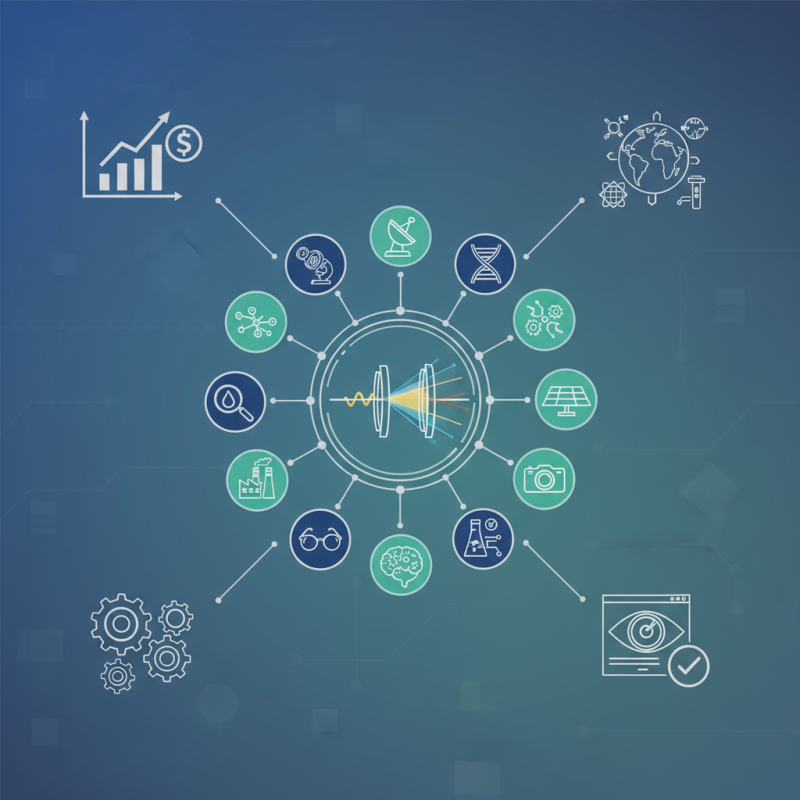
Top 10 Interference Filters Every Buyer Should Know About?

What Are Interference Filters and How Do They Work?

Interference filters are optical devices that selectively transmit specific wavelengths of light. They work based on the principle of constructive and destructive interference. When light passes through multiple thin layers, certain wavelengths are amplified while others are canceled out. This creates a filter effect that is essential in various applications, from photography to scientific research.

The design of interference filters often involves complex layering. These layers can be made from different materials, each with specific refractive indices. The thickness of each layer is carefully calculated to target desired wavelengths. This precision ensures that the filter performs effectively. However, not every application needs a complex filter. Simpler designs can work well in less demanding situations.

Users should consider environmental factors that may affect filter performance. Temperature and humidity can impact the reliability of the filter. Additionally, the quality of light entering the filter can change depending on the light source and its angle. While interference filters are robust, they can show imperfections like unwanted reflections. Proper testing is vital to ensure effectiveness and reliability. Understanding these nuances helps in selecting the best filter for each unique situation.

Top 10 Interference Filters Every Buyer Should Know About

Filter Type Peak Wavelength (nm) Bandwidth (nm) Transmittance (%) Application
Band Pass Filter 450 20 90 Fluorescence Microscopy
Low Pass Filter 630 30 85 Laser Applications
High Pass Filter 700 35 92 Spectroscopy
Notch Filter 532 10 95 Optical Sensing
Mirror Coating Filter 500 50 99 Laser Beam Splitting
Thin Film Filter 450 15 88 Color Correction
Polarizing Filter 580 Broad 95 Photography
Chroma Filter 650 40 93 Biomedical Imaging
Color Filter 400 25 89 Stage Lighting

Types of Interference Filters Used in Different Applications

Interference filters are crucial in various fields. Their application can be seen in photography, scientific research, and optical devices. Each filter type serves specific needs based on its design and function. The primary types include bandpass, longpass, and shortpass filters.

Bandpass filters allow a certain range of wavelengths to pass while blocking others. They are essential in spectroscopy and fluorescence microscopy.

Longpass filters transmit wavelengths longer than a specific point. These are often used in applications requiring a clear view of the infrared spectrum.

Shortpass filters block wavelengths longer than a certain threshold, useful in lasers and imaging.

In choosing the right filter, consider your specific needs. The filter's efficiency can deviate based on manufacturing quality. Overly saturated filters may distort images rather than enhance them. Understanding these nuances can significantly impact your project's success. Always assess the environment and application carefully. Each filter type has strengths and weaknesses, and the choice should reflect practical requirements—avoid relying solely on theoretical benefits.

Key Specifications to Consider When Buying Interference Filters

When considering interference filters, key specifications have a significant impact on performance. Start by examining the wavelength range. Filters must suit your application’s light source. For instance, the chosen filter should allow specific wavelengths while blocking others effectively.

Another crucial factor is the bandwidth. Narrow-band filters provide precise wavelength selection. Widening the bandwidth can enhance light transmission but may reduce selectivity. Balance is essential here. Some applications might not require extremely narrow filtering. Others certainly do.

Tips: Assess the material used in the filter. Glass and optical coatings can affect durability and performance. Check the angle of incidence as well. It influences the transmission spectrum. Lastly, ensure the filter's mounting options are compatible with your setup. Avoid mismatches that could lead to installation issues.

Top Manufacturers of Interference Filters You Should Know

When exploring interference filters, knowing the top manufacturers is crucial. These companies create filters that precisely select wavelengths for various applications. Medical imaging, scientific research, and photography benefit significantly from high-quality interference filters. Reliable manufacturers employ advanced techniques to ensure optimal performance. They focus on durability and efficiency, essential for sensitive instruments.

These manufacturers have decades of experience. They often collaborate with research institutions to improve filter technology. Their expertise helps in creating filters tailored to specific needs. Professionals rely on these products for accuracy and consistency in results. It is important to evaluate the specifications when choosing a filter. Not all filters are equal, and some may not meet rigorous demands.

While many manufacturers offer promising products, it’s necessary to research each one carefully. Look for customer feedback and industry certifications. Relying solely on brand reputation can be misleading. Market trends shift, and new companies may rise. Sometimes, established companies may falter, proving that ongoing quality assessment is vital. Select your manufacturer with care, keeping your application requirements in mind.

Tips for Selecting the Right Interference Filter for Your Needs

When selecting an interference filter, understanding the application is crucial. Different filters serve varying purposes. For instance, a filter that blocks certain wavelengths while allowing others to pass is crucial in research settings. Knowing your specific wavelength requirements is vital. According to a recent industry report, 72% of users reported improved results when using the correct filter for their application.

Another important aspect is the filter's transmission characteristics. Look for filters with high transmission rates in their specified wavelength range. Filters with low average transmission outside their intended range can distort results. Research shows that using a filter with a transmission efficiency of over 90% can enhance signal clarity significantly. However, selecting such filters often involves cost considerations. Balancing quality and budget can be a reflective process for many buyers.

Lastly, consider the material and durability of the filter. Some filters use glass, while others employ more advanced materials like plastics. A comparison study indicates that glass filters typically offer greater durability and stability. Nonetheless, plastic options are lighter and often more cost-effective. Weighing the longevity against the budget is essential. Each application might require thoughtful consideration and a bit of compromise.