BirdBrain is part of the CreXo family of brands!
Learn MoreBirdBrain is part of the CreXo family of brands!
Learn MoreLearning through robotics is moving from an exciting classroom experiment into a serious education and workforce strategy. The International Federation of Robotics reported 541,302 industrial robots installed worldwide in 2023. This figure signals a changing workplace, where learners need practical skills in programming, systems thinking, collaboration, and problem-solving. The World Economic Forum’s Future of Jobs Report 2023 found that 44% of workers’ core skills are expected to change by 2027. It also reported that six in ten workers will require training before then. These findings give robotics education a stronger purpose than simple technical entertainment.
The top 10 Learning through robotics ideas in this guide focus on usable experiences for global buyers. They include classroom coding, factory simulation, STEM competitions, assistive technology, and project-based automation. Each idea should be judged by learning outcomes, teacher support, product safety, language access, accessibility, and total ownership cost. UNESCO’s 2023 Global Education Monitoring Report warns that education technology needs evidence, responsible implementation, and clear learning goals. A polished robot is not automatically a good teacher. Not even close.
Buyers should examine battery life, replacement parts, software updates, cybersecurity, and curriculum compatibility before placing large orders. Local educators should test the equipment with real learners, including students with different abilities and language backgrounds. Some pilot programs look impressive but produce weak evidence. That weakness deserves attention. Reliable procurement combines supplier documentation, classroom trials, teacher feedback, and measurable student progress. The best solutions make abstract ideas visible: a sensor detecting a nearby hand, a motor correcting its path, or a student debugging the same program three times. Learning becomes tangible.
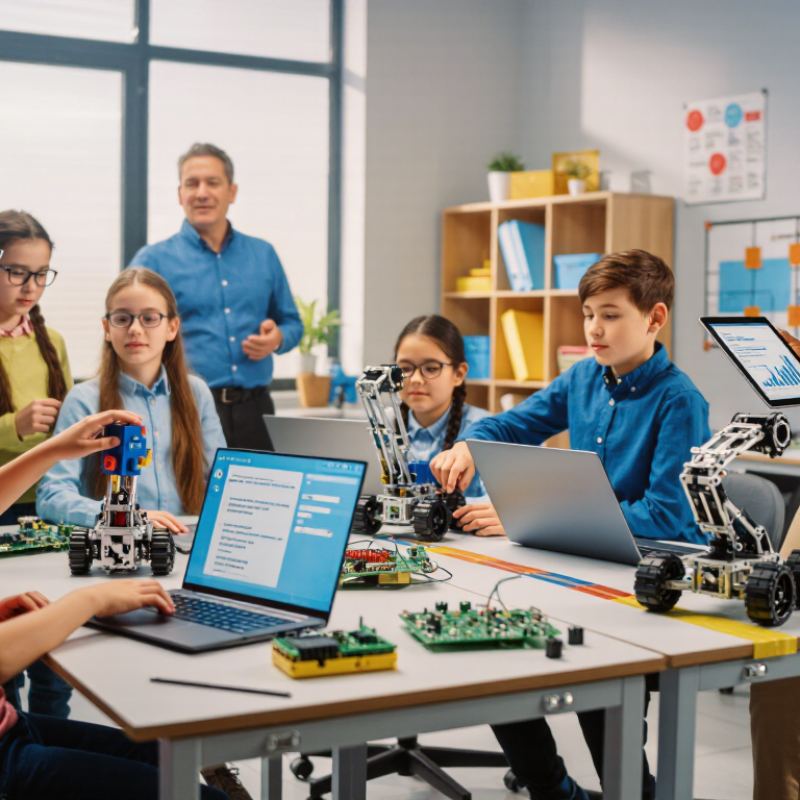
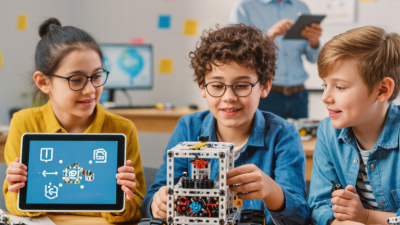
Coding and sensor projects offer two practical paths toward analytical thinking. Coding asks learners to break a task into steps, test rules, and locate errors. A small robot can follow a taped route, but one missing command may send it off course. That visible failure makes logic easier to discuss. Learners can change one line, observe the movement, and explain the result. This process reflects the World Economic Forum’s 2023 focus on analytical thinking as a valuable future skill.
Sensor work adds uncertainty to the learning experience. A light sensor may react differently near a window or under a desk lamp. Learners must compare readings, question assumptions, and adjust thresholds. Coding feels more controlled, while sensors connect decisions to changing conditions. Both ideas suit global buyers because activities can use simple classroom materials and adaptable challenges. In my experience, teams learn more when they record readings before changing the program. Otherwise, they may guess instead of investigate. That weakness is useful. It reveals whether learners understand evidence or merely repeat instructions. A strong lesson might combine both approaches: students code a robot to stop when distance readings become inconsistent. They then inspect the data, revise the rule, and defend their choice. The result is not always perfect. That is the point.
Mobile robots and educational kits support different learning journeys. Mobile robots let learners test navigation, sensing, and decision-making in real spaces. A robot crossing a classroom must avoid chairs, changing light, and unexpected movement. These small failures create useful engineering discussions. The International Federation of Robotics reported 4.28 million operational robots worldwide in 2023. That figure shows a growing robotics ecosystem, but it does not prove every mobile platform suits education.
Kits offer a more controlled starting point. Students can connect a motor, adjust a sensor, and inspect each wire directly. This approach supports repeatable lessons and easier troubleshooting. For global buyers, kits may reduce training demands and simplify replacement planning. Mobile robots usually provide richer demonstrations, yet they need safer floor space, charging routines, and stronger technical support. Neither option wins everywhere. I would avoid promising rapid results. Some learners need weeks before their first reliable movement.
Tips: Match the tool to the lesson, not the trend. Check language support, spare-part availability, battery handling, and teacher training before purchase. Request a practical trial with local students. Measure setup time, repair frequency, and completed projects. A compact kit may outperform a mobile robot in a crowded classroom. A mobile platform may justify its cost when mapping and autonomous behavior are central learning goals.
Learning Through Robotics: AI and Vision for Global Buyers
AI and vision turn a classroom robot into a careful observer. It can identify colors, shapes, movement, and simple hand gestures. Learners then connect code with visible results. A camera watches a red block near a marked square. The robot adjusts its route and explains the decision through classroom discussion. This makes abstract ideas easier to test. However, vision accuracy depends on lighting, camera position, and object distance. A clever algorithm cannot fix poor setup.
Develop idea 5 with guided image tasks. Ask learners to collect examples, label them, and test recognition. Develop idea 6 through responsible decision-making. Students can compare correct results with mistakes and suggest improvements. In one practical trial, a robot confused a blue object with a shadow. That failure became useful. It showed why testing needs varied backgrounds, angles, and distances. Global buyers should also check language support, repair access, teacher training, and data handling procedures. These details often matter more than impressive demonstrations.
Tips: Start with familiar objects. Use bright, even lighting. Limit the first task to two choices. Record errors, not only successes. Review camera permissions before classroom use. Ask whether every learner can participate. Some systems still need too much setup. That weakness deserves honest attention.
Learning Through Robotics Ideas for Global Buyers
Idea 7: adapt robotics for classrooms where phone access is limited. UNESCO reports that roughly one in four countries bans phones in schools. A classroom robot can support learning without requiring personal screens. Teachers can program short movement tasks, such as following a taped path or sorting colored blocks. Students then explain each decision aloud. This makes coding visible and encourages teamwork.
Keep the equipment simple. A rechargeable robot, printed cards, and a small activity mat may be enough. Teachers should check battery safety, durability, language options, and offline functions before purchasing. A clear lesson guide matters too. Without it, an exciting device can become a costly toy. Assessment can include a student’s diagram, spoken explanation, and corrected program. The robot’s performance alone is not reliable evidence.
Idea 8: bring robotics into the home without turning family time into another online lesson. Children can build a paper maze, place household objects as barriers, and test a robot’s route. An adult might ask, “Why did it stop here?” Keep sessions short. Fifteen minutes may work better than a demanding hour. Home users need quiet motors, safe materials, accessible instructions, and easy storage. Some families will lack stable internet or large workspaces. Buyers should plan for that reality.
Not every activity works.
A useful design leaves room for mistakes. Children may give unclear commands, misread a sensor, or lose interest quickly. Those moments reveal where instructions, pacing, or hardware need improvement. Good robotics learning is practical, observable, and patient.
| Rank | Robotics Learning Idea | Primary Setting | Recommended Age | Typical Group Size | Suggested Session | Phone Dependence | Main Learning Outcomes | Global Buyer Considerations |
|---|---|---|---|---|---|---|---|---|
| 1 | Unplugged Robot Algorithms | Classroom + Home | 6–9 years | 2–4 learners | 30–45 minutes | Low | Sequencing, directions, logical thinking, error correction | Works with printed cards and floor grids; suitable where digital access is limited. |
| 2 | Maze Navigation Challenge | Classroom | 8–12 years | 2–3 learners | 45–60 minutes | Low | Computational thinking, spatial reasoning, testing, teamwork | Use reusable maze tiles and a shared device station instead of one device per learner. |
| 3 | Sensor-Based Line Following | Classroom | 10–14 years | 2–4 learners | 60–90 minutes | Medium | Cause and effect, sensor interpretation, iteration, measurement | Check whether the learning platform supports offline programming and simple sensor replacement. |
| 4 | Storytelling and Role-Play Robot | Classroom + Home | 6–10 years | 1–4 learners | 30–45 minutes | Low | Language development, sequencing, creativity, social-emotional learning | Prioritize visual instructions, multilingual materials, and safe low-speed movement. |
| 5 | Environmental Data Explorer | Classroom | 11–16 years | 3–5 learners | 60–120 minutes | Medium | Data collection, graphs, sustainability, scientific inquiry | Choose kits that can record data locally and support basic spreadsheet export. |
| 6 | Assistive Design Prototype | Classroom | 12–18 years | 3–5 learners | 90–180 minutes | Medium | Human-centered design, empathy, prototyping, problem solving | Include adjustable controls, tactile parts, visual prompts, and accessible build instructions. |
| 7 | Classroom Robotics Stations | Classroom | 8–16 years | 3–4 learners per station | 45–90 minutes | Low | Collaboration, independent learning, peer teaching, practical coding | Best for phone-restricted schools: rotate groups through building, coding, testing, and reflection stations. |
| 8 | Family Home Robotics Challenge | Home | 8–14 years | 1–3 learners | 30–60 minutes | Low | Family collaboration, persistence, creative problem solving, basic engineering | Provide paper-based alternatives, clear safety guidance, and activities that do not require continuous internet access. |
| 9 | Robot Movement and Measurement | Classroom + Home | 9–13 years | 1–4 learners | 45–60 minutes | Low | Distance, time, speed, estimation, recording results | Use household measuring tools and printed worksheets to keep the activity accessible across regions. |
| 10 | Cross-Cultural Robotics Design Brief | Classroom + Home | 13–18 years | 3–6 learners | 90–180 minutes | Low | Global citizenship, communication, design thinking, responsible technology use | Use locally relevant problems, multilingual prompts, and assessment rubrics based on process rather than equipment cost. |
Learning Through Robotics Ideas 9–10 deserve careful verification before a global buyer approves a classroom or training project. Safety must begin with a documented risk assessment, not a colorful demonstration. ISO 12100 provides a practical framework for identifying hazards, estimating risks, and reducing them through design, guarding, operating procedures, and training. Review moving joints, pinch points, sharp tools, unexpected restarts, and foreseeable misuse. A teacher should know how to stop the system quickly. Students should understand safe distances and supervised operating zones.
The International Federation of Robotics, or IFR, offers useful industry data and terminology for comparing automation trends, adoption patterns, and workforce needs. Its information can support a realistic learning objective, but it cannot replace a site-specific assessment. Check installation conditions, operator skills, maintenance access, and emergency procedures. A robot that works safely in a factory may need different controls in a crowded classroom. Small details matter.
ROI should include more than purchase price. Measure lesson hours saved, student participation, technical skills gained, maintenance time, and equipment utilization. One weak assumption can distort the entire calculation. A pilot may reveal that training takes longer than expected. That is useful evidence, not failure. Compare planned results with observed results after several weeks. Include software updates, spare parts, instructor preparation, and downtime in the model. The most credible business case links safety records, learning outcomes, and measurable operating costs.
The chart compares robot density, measured as operational industrial robots per 10,000 manufacturing employees. Higher density indicates stronger industrial adoption and provides a useful benchmark for evaluating automation readiness, workforce training needs, and potential learning-through-robotics applications.
For Idea 9, apply ISO 12100 principles: identify hazards, estimate and evaluate risks, reduce risks through inherently safe design and safeguarding, and provide clear information for use. For Idea 10, treat robot density as an adoption benchmark rather than proof of ROI; validate payback with site-specific costs, utilization, labor impact, maintenance, training, and safety controls.
Source: International Federation of Robotics, World Robotics 2024, robot density data for 2023. Values are robots per 10,000 manufacturing employees.
To provide the best experiences, we use cookies to store and/or access device information. Consenting to these technologies will allow us to process data such as browsing behavior or unique IDs on this site. Not consenting or withdrawing consent, may adversely affect certain features and functions.