BirdBrain is part of the CreXo family of brands!
Learn MoreBirdBrain is part of the CreXo family of brands!
Learn MoreProject based learning gives students a reason to build, test, and revise—not just follow instructions. A well-designed kit can turn a classroom table into a small engineering studio, with gears, sensors, craft materials, or simple coding tools ready for a real challenge. Chinese suppliers offer a wide range of these products, but country of origin alone does not tell educators whether a kit is effective. Details matter.
This guide explores how to compare project based learning kits from China by examining practical factors: clear project goals, age-appropriate components, sturdy materials, readable instructions, and room for students to make their own decisions. A useful kit should support meaningful tasks, such as building a bridge that holds weight or programming a small robot to follow a route. Look closely. Teachers can also review sample lessons, replacement-part availability, customer support, and safety information for their intended market. These checks help distinguish a thoughtfully developed resource from a box of parts with limited classroom guidance.
No single kit suits every school. A robotics set may inspire one class and frustrate another if devices, preparation time, or teacher experience are limited. That is worth admitting. Product descriptions can be polished, while classroom results depend on how students use the materials. The comparisons ahead focus on features educators can verify, while recognizing that independent classroom testing may reveal gaps a catalog cannot show. The goal is not to crown one universal winner, but to help buyers choose a kit that fits their learners, budget, and teaching plans.
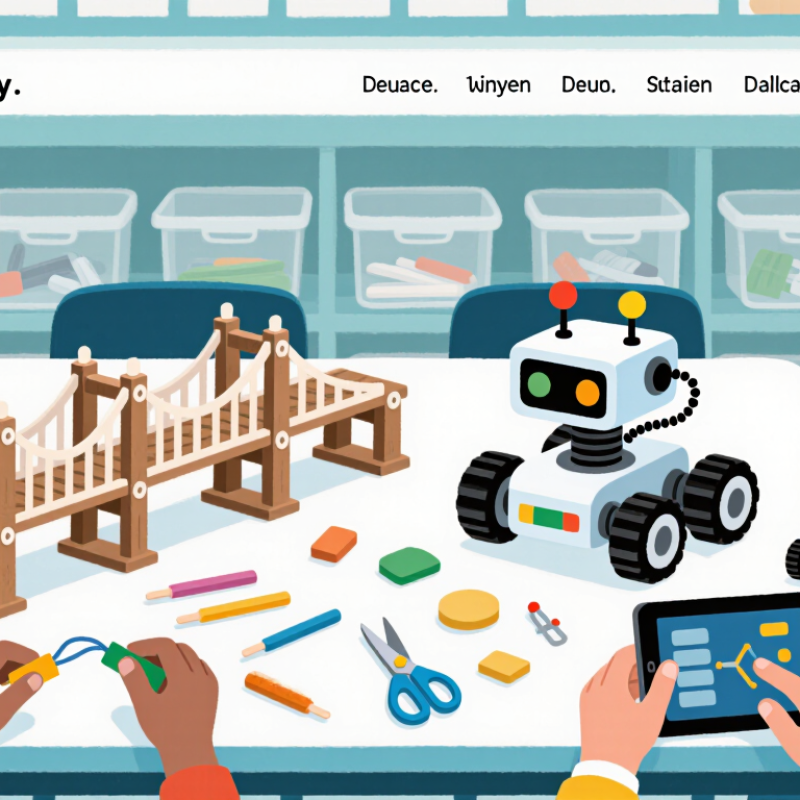
Project-based learning kits package a real question, practical materials, and a guide for testing ideas. Learners might build a paper bridge, measure its load, then revise the design. The kit supports learning when students explain why a change worked, not just complete the steps. The box is only a starting point.
A 2021 randomized study of elementary science instruction reported an 8-percentage-point advantage on science assessments for students using project-based learning. Freeman and colleagues’ 2014 meta-analysis of 225 undergraduate STEM studies found active learning raised exam performance by about 6%; lecture-only students were 1.5 times more likely to fail. These findings support hands-on, active approaches, but they do not prove every kit produces the same results.
For kits made in China, examine the lesson plan, material durability, and whether tasks allow more than one solution. Can learners record measurements, compare outcomes, and improve a prototype? A teacher should also be able to adapt the project to available time and student experience. That matters. A kit with many parts can still offer little learning if students simply copy instructions. I would check whether its activities leave room for questions—and admit that judging this from a product description alone is imperfect.
What Are the Best Project Based Learning Kits from China?
An effective project kit turns instructions into choices. Students should be able to test an idea, spot a fault, and revise their design. Look for modular parts, clear diagrams, and components that can be reused across several tasks. A small motor, wheels, and a battery holder can support a moving model, then a redesign challenge. Small parts matter. So do spare pieces and a parts list; missing one connector can stall a group.
The Education Endowment Foundation’s Teaching and Learning Toolkit estimates collaborative learning can add five months of progress on average. That finding is not a guarantee for every classroom, but it highlights the value of kits designed for teamwork. Choose materials that let three or four students share roles, compare results, and explain decisions. The World Economic Forum’s Future of Jobs Report 2023 names analytical thinking as a leading core skill. Kits with adjustable variables, such as wheel size or ramp angle, give students a concrete way to practise it.
For buyers sourcing from China, check sample consistency, labeling, assembly time, and the clarity of translated instructions. Ask whether replacement parts are available. A kit that works once may still be poor value. No kit is perfect: too many steps can turn exploration into copying, while too little guidance can leave beginners stuck. A short teacher guide with open-ended extensions helps balance both.
| Evaluation Dimension | What an Effective Kit Includes | Questions to Check Before Buying | Priority |
|---|---|---|---|
| Clear project outcomes | A practical challenge with a defined goal, such as building, testing, or improving a working model. | Can learners explain what they are making and how they will know whether it works? | High |
| Open-ended design | More than one possible solution, with room to change the design and compare results. | Does the activity invite learners to make choices, or does it only ask them to copy a fixed set of steps? | High |
| Hands-on components | Reusable parts suited to the project, such as structural pieces, simple circuits, sensors, or motors where relevant. | Are the parts compatible with the project, durable enough for repeated use, and easy to identify? | High |
| Age-appropriate challenge | Instructions, tools, and concepts matched to the learners’ experience, with optional extensions for different skill levels. | Are assembly steps and safety requirements understandable for the intended age group? | High |
| Testing and iteration | Activities that encourage learners to observe results, find problems, revise a design, and test it again. | Does the project include time and guidance for improving a first attempt? | High |
| Learning support | Well-organized instructions, diagrams, project prompts, and teacher or facilitator guidance. | Are the materials available in the required language, and do they explain both the build and the learning goals? | High |
| Safety and materials | Clearly identified materials, age guidance, safe-use instructions, and suitable components for the activity. | Are hazards, supervision needs, and any required protective equipment clearly stated? | High |
| Parts organization and replacement | Parts that are easy to sort and store, with an inventory and a practical way to obtain missing or damaged pieces. | Is there a parts list, and can commonly needed components be replaced? | Medium |
| Curriculum flexibility | Projects that can connect with relevant concepts in science, technology, engineering, mathematics, or design. | Can the kit support short activities as well as longer team projects? | Medium |
| Evidence of learning | Opportunities for learners to record observations, explain design choices, and present or demonstrate a finished project. | Does the activity help learners show what they learned, not just what they assembled? | Medium |
China-made project-based learning kits can be matched to specific goals, not just age groups.
For basic engineering, modular building sets let learners test balance, load, and simple machines with beams, wheels, and small weights.
Electronics kits suit circuit literacy: students connect LEDs, switches, and sensors, then troubleshoot why a light stays dark.
Robotics kits add coding and feedback, while model-growing kits can introduce observation and measurement.
Keep the task visible. Build, test, revise.
The choice matters. The World Economic Forum’s Future of Jobs Report 2023 says analytical thinking is a core skill for nine of ten surveyed companies; it also estimates that 44% of workers’ skills will change by 2027.
Kits with open-ended challenges can exercise these abilities, but a pile of parts is not a lesson. A kit can look impressive and teach very little.
Check that instructions explain the learning goal, parts are replaceable, and tasks invite more than one solution.
For younger learners, large connectors and picture-led steps reduce frustration. For older students, sensor-based projects can involve data logging and simple experiments.
Not every kit does this well. A useful test is whether learners can explain what failed, and what they changed, rather than simply show a finished model.
When comparing project-based learning kits from China, inspect the learning task before the packaging. Can students build, test, and revise something in one class period? Check whether instructions show real assembly steps, not just polished finished models. Ask for a complete parts list, replacement-part availability, and material or safety test reports for the intended age group. Small parts matter. A low unit price can rise after freight, spare components, and teacher preparation time are included.
Safety and classroom fit need equal attention. Request clear age guidance, safe-use instructions, and evidence that components meet applicable toy-safety standards. Then test one sample with the actual class: Can students sort the pieces quickly? Do connectors stay attached during repeated use? A tidy sample may hide weak hinges or confusing diagrams. One trial is not enough.
For learning impact, Lucas Education Research’s randomized study of project-based AP courses found pass rates increased by 8 percentage points in government and 10 points in environmental science. That result supports structured projects, not any particular kit. OECD’s PISA 2022 results assess students’ ability to apply scientific knowledge, a useful reminder to favor kits that ask learners to explain evidence, not only assemble parts. Still, classroom time, student age, and teacher support can change the outcome. Compare those costs and conditions before ordering in bulk.
Choosing a project-based learning kit starts with the lesson, not the box. Define what learners should make, test, or explain, then check whether the kit supports that outcome. A bridge-building set, for example, should include enough connectors for repeated trials, not just one polished model. Check age suitability, group size, setup time, and how much guidance students need. Hands-on does not always mean learner-led.
Read the parts list closely. Look for durable, safe-to-handle materials, clear instructions, and replacement options for pieces likely to go missing. Ask suppliers for product specifications, classroom photos, sample lesson plans, and a sample kit when practical. A short trial can reveal awkward instructions or fragile joints before a larger order. Small details matter.
When sourcing from China, compare complete costs, including packaging, shipping, lead time, and any customization charges. Ask how quality is checked across production batches and what happens if items arrive damaged or incomplete. Request written answers and keep the agreed specifications on record. It can feel tedious. Still, vague replies are worth noticing. Pilot the kit with one class before scaling up; a neat catalog photo cannot show whether students can actually share the tools, follow the task, and learn from a failed attempt.
To provide the best experiences, we use cookies to store and/or access device information. Consenting to these technologies will allow us to process data such as browsing behavior or unique IDs on this site. Not consenting or withdrawing consent, may adversely affect certain features and functions.