7 Best Robotics Design Challenges for Global Buyers

For global buyers, Robotics design challenges begin long before a robot enters the factory. They begin with a practical question: will this system work reliably in a real operating environment? The International Federation of Robotics reported 541,302 industrial robots were installed worldwide in 2023. The global operational stock exceeded 4.2 million units. These figures show strong demand, but they also expose a harder issue: buyers must compare complete systems, not impressive specifications.

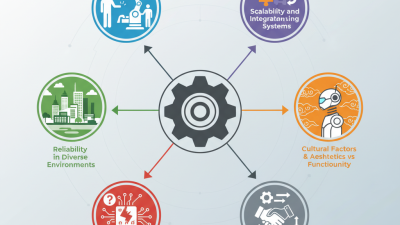
This guide examines seven Robotics design challenges that influence purchasing decisions. They include application fit, safety, software integration, sensing accuracy, maintenance access, supply resilience, and total lifecycle cost. A robot may lift a heavy load perfectly in a demonstration. It may struggle beside dust, glare, vibration, or changing workflows. Small details matter. Cable routing matters. Training time matters. Downtime matters more.

MIT roboticist Daniela Rus has said, “The future of robotics is not about replacing humans; it is about augmenting human capabilities.” That principle should shape every design review. The IFR’s World Robotics 2024 findings support this human-centred direction, as automation continues expanding across manufacturing and service environments. Still, market reports cannot predict every site-specific failure. A neat checklist can mislead. No design is perfect. Buyers should question integration claims, test recovery procedures, and request measurable evidence from comparable deployments. The strongest decision balances technical performance with operator experience, cybersecurity, support capacity, and long-term adaptability. This is where professional evaluation becomes essential.

7 Best Robotics Design Challenges for Global Buyers

What Robotics Design Challenges Mean for Global Buyers

Robotics design challenges matter to global buyers because technical choices quickly become commercial risks. The International Federation of Robotics reported 541,302 industrial robots installed worldwide in 2023, with 4.28 million operating. This scale increases choice, but not simplicity. Buyers must compare payload, reach, cycle time, tooling, software interfaces, and maintenance access. A robot that performs well in a laboratory may struggle beside a dusty conveyor or in a temperature-changing facility. Design decisions become procurement risks when local technicians cannot repair equipment quickly.

The hardest challenge is integration. A machine must communicate with existing controls, vision systems, safety circuits, and production data. ISO 10218 and ISO/TS 15066 provide safety guidance, but compliance still requires site-specific risk assessment. Regional electrical rules, language requirements, spare-part availability, and training also affect total ownership cost. IFR’s World Robotics 2024 data shows Asia represented 70% of 2023 installations, compared with 17% in Europe and 11% in the Americas. These differences warn buyers against copying one factory design everywhere. Standardization helps. Excessive standardization can restrict useful customization.

Tips: Ask for cycle-time evidence using your actual workpieces. Request interface lists, safety documents, and maintenance intervals before approval. Test recovery after a sensor fault, not only normal operation. Include local service capacity in the scoring model. Keep a contingency budget. Integration rarely behaves perfectly. That is not failure. It is a design signal.

Key Criteria for Evaluating Robotics Design Challenges

7 Best Robotics Design Challenges for Global Buyers

Key Criteria for Evaluating Robotics Design Challenges

Global buyers should judge robotics challenges by real operating conditions, not polished demonstrations. Useful challenge areas include manipulation, mobile navigation, visual inspection, collaborative work, logistics, precision assembly, and energy efficiency. Each task should reflect a measurable business problem. A robot lifting empty boxes proves little when production involves fragile parts, dust, or uneven floors.

Safety must remain measurable. Reviewers should examine force limits, emergency stops, obstacle detection, and recovery behavior. Test procedures should use repeatable scenarios, clear scoring, and documented tolerances. A reliable challenge also measures downtime, calibration effort, maintenance access, and operator training time. Small details matter. Ask who repairs it.

Global deployment adds stricter criteria. Buyers should check language support, electrical compatibility, environmental ratings, cybersecurity controls, and compliance documentation for target markets. Interoperability with common industrial communication standards can reduce integration risk. Total cost should include installation, spare parts, software updates, and technician travel. Cheap trials often become expensive systems.

Independent reviewers should record failures, not hide them. A robot may achieve high accuracy in a controlled room but struggle under changing light or temperature. Pilot testing with local operators can reveal practical weaknesses. I would also question scoring systems that reward speed alone. Faster is not always better. Reliable performance, safe recovery, and long service life usually create stronger value.

Seven Leading Robotics Design Challenges Across Industries

7 Best Robotics Design Challenges for Global Buyers

Across industries, robotics buyers face seven recurring design challenges. The first is defining the real task, not the idealized workflow. A warehouse robot may need to handle crushed cartons, changing aisles, and uneven floors. The second is reliable perception. Cameras and sensors can struggle with dust, glare, shadows, or crowded workspaces. The third is precise manipulation. Small differences in shape, weight, and surface texture can cause failed gripping.

The fourth challenge is safe mobility. Robots must navigate around workers, equipment, and unexpected obstacles. The fifth is human-robot collaboration. Controls should feel understandable, while emergency stops and protective limits require careful testing. The sixth challenge involves energy and maintenance. Battery duration, charging access, spare parts, and cleaning routines directly affect operating costs. A robot that stops during a busy shift is expensive. The seventh is system integration. Buyers must connect robotics with existing software, production schedules, inspection tools, and data controls.

Global buyers should request performance evidence from realistic trials, not only polished demonstrations. Test reports, operator training, maintenance instructions, and transparent limitations show professional responsibility. No design is perfect. A prototype may perform well in a controlled facility but fail near reflective surfaces or irregular loads. Our assumptions can also be wrong. Pilot testing with local operators often reveals practical problems that engineering teams overlook. That feedback can improve reliability, purchasing decisions, and long-term deployment across different industries.

How to Compare Technical Performance, Cost, and Scalability

7 Best Robotics Design Challenges for Global Buyers

For global buyers, the seven best robotics design challenges are practical comparison tests, not showroom demonstrations. They cover payload accuracy, cycle time, energy use, safety integration, maintenance access, software openness, and production scalability. The International Federation of Robotics reported 541,302 industrial robots were installed worldwide in 2023. That volume raises a practical question: can a design perform reliably after deployment? Measure repeatability under heat, dust, vibration, and changing loads. A perfect laboratory score can collapse on a busy factory floor.

Compare cycle time with usable uptime, not peak speed. Request logged fault rates, recovery time, calibration drift, and spare-part lead times. For cost, calculate total ownership over five years. Include integration labor, training, energy, tooling, software updates, and downtime. The IFR’s World Robotics 2024 report recorded global robot density at 162 units per 10,000 manufacturing employees in 2023. Scalability needs modular tools, common interfaces, simulation models, and remote diagnostics. A pilot cell may cost less, yet duplicate poorly across sites. That is where many procurement plans fail. Some estimates will be wrong. Keep them visible.

Tips: Build a weighted scorecard before requesting quotations. Give performance 40%, total cost 30%, and scalability 30%. Adjust these weights for operational risk. Ask for measured data from comparable tasks, not brochure claims. Use a paid pilot with acceptance tests for accuracy, uptime, safety response, and changeover time. Do not confuse more robots with better economics.

7 Best Robotics Design Challenges for Global Buyers - How to Compare Technical Performance, Cost, and Scalability

Robotics Design Challenge Typical Application Primary Technical Performance Measures Representative Performance Range Estimated System Cost (USD) Integration Complexity Scalability Potential Best Evaluation Priority
1. Vision-Guided Bin Picking Picking randomly oriented parts from bins for feeding, kitting, or packaging. Pick success rate
Cycle time
Payload and reach
Vision recovery rate
90–99% successful picks after tuning
Approximately 8–25 seconds per pick
Typical payload: 3–20 kg
$80,000–$250,000 High; requires robot, gripper, 2D/3D vision, part feeding logic, and safety integration. High Confirm performance across the full range of part shapes, finishes, sizes, and orientations.
2. Autonomous Mobile Robot Navigation Transporting materials between storage, production, inspection, and shipping areas. Localization accuracy
Navigation availability
Payload capacity
Battery runtime and charging time
Approximately ±10–50 mm localization accuracy
8–16 hours of operation per charge
Typical payload: 100–1,500 kg
$35,000–$150,000 per vehicle Medium to high; depends on facility maps, traffic rules, elevators, doors, Wi-Fi, and fleet software. Very high Compare fleet-management capacity, route flexibility, safety behavior, and deployment time at additional sites.
3. Robotic Assembly and Screwdriving Joining, fastening, insertion, pressing, and component assembly in repetitive production tasks. Repeatability
Assembly cycle time
Insertion force control
First-pass yield
Typical repeatability: ±0.02–0.10 mm
Approximately 10–60 seconds per assembly
First-pass yield commonly targeted above 98%
$60,000–$220,000 High; requires tooling, part presentation, force control, error-proofing, and process validation. High Test tolerance variation, fastener quality, tool-change requirements, and recovery from misalignment.
4. Robotic Welding and Fabrication Arc welding, spot welding, cutting, and repetitive fabrication of metal structures. Seam accuracy
Deposition or weld cycle time
Arc-on time
Weld quality consistency
Typical positioning repeatability: ±0.05–0.20 mm
Arc-on time often targeted at 50–80%
Cycle time varies widely by joint and material
$100,000–$350,000 High; requires fixtures, welding power source, consumable management, ventilation, and skilled process setup. Medium to high Evaluate fixture changeover, material thickness range, seam tracking, safety controls, and operator training.
5. Automated Visual Inspection Detecting surface defects, dimensional errors, missing components, and labeling or packaging problems. Detection rate
False-reject rate
Inspection cycle time
Image traceability
Detection performance commonly targeted at 95–99.5% for defined defects
Cycle time: approximately 0.2–5 seconds per item
$40,000–$180,000 Medium; depends on lighting, camera selection, defect examples, data labeling, and production-line interfaces. Very high Require a validated test set containing normal variation, rare defects, reflective surfaces, and product changes.
6. Robotic Palletizing and Depalletizing Stacking or unloading cartons, bags, cases, and containers for distribution or manufacturing. Cases per minute
Payload and reach
Stack pattern accuracy
Changeover time
Approximately 8–30 cases per minute
Typical payload: 10–200 kg
Product changeover: roughly 5–30 minutes with suitable tooling
$70,000–$250,000 Medium; standardized products are easier, while mixed-SKU handling requires advanced vision and software. Very high Compare throughput at the required payload, end-of-arm tooling flexibility, and integration with conveyors and warehouse systems.
7. Collaborative Human-Robot Workcells Assisting operators with loading, testing, dispensing, light assembly, or material handling. Safe operating speed
Payload and reach
Ergonomic improvement
Task repeatability
Typical payload: 3–20 kg
Repeatability commonly around ±0.03–0.10 mm
Actual speed depends on risk assessment, tooling, and workspace conditions
$40,000–$160,000 Medium; usually simpler to deploy, but safety validation and workstation design remain essential. High Check risk-assessment documentation, restart behavior, operator usability, tool safety, and deployment across different shifts.

Note: Cost and performance figures are indicative industry benchmark ranges for complete automation cells or deployed systems, excluding taxes, shipping, facility modification, and unusually complex customization. Actual results depend on payload, cycle time, product variation, safety requirements, local labor costs, and integration scope.

Selecting the Right Robotics Challenge for Your Market

7 Best Robotics Design Challenges for Global Buyers

Selecting the Right Robotics Challenge for Your Market

Global buyers should match a robotics challenge to local production realities, not impressive demonstrations. The seven strongest options include precision assembly, machine tending, warehouse picking, visual inspection, mobile navigation, collaborative safety, and harsh-environment handling. Each requires different sensors, grippers, software, training, and maintenance skills.

The International Federation of Robotics reported 541,302 industrial robots were installed worldwide in 2023, with more than 4.28 million operating globally. This scale shows strong demand, but it does not make every solution suitable for every market. A food processor may prioritize washable surfaces and accurate picking. An automotive supplier may need repeatable assembly and machine tending. A smaller factory may value simple programming more than maximum speed.

Start with the buyer’s real bottleneck. Measure cycle time, product variation, floor space, worker availability, and service access. For warehouse projects, test grasping with actual packaging, including crushed cartons and reflective wrapping. For inspection, check false rejects under changing light. It is easy to overestimate laboratory performance.

A common selection mistake is choosing the most advanced challenge first. That can create expensive integration work. The World Economic Forum’s Future of Jobs Report 2025 identifies robotics and automation as major business transformation drivers, while also highlighting skill gaps. Buyers should therefore assess technician training, spare-part access, safety certification, and data governance before approving a design. The best challenge may look less exciting. It often delivers the clearest operational gain.