Where to Find the Best Creative Learning Activities in China?

Creative learning activities are easier to find in China when families look beyond formal classrooms. A weekend science museum visit, a library craft table, or a neighborhood makerspace can turn everyday materials into experiments. But quality varies. Parents and educators should check who leads each session, what children make, and whether the activity encourages questions rather than copying. These details matter more than a colorful poster.

The OECD’s PISA 2022 Results, Volume III: Creative Minds, Creative Schools, reported that 78% of students across OECD countries, on average, reached baseline proficiency in creative thinking. This is not a China-specific result or a ranking of Chinese programs. It is a useful reminder that creativity can be practiced through thoughtful tasks and feedback. Employer research points in a similar direction: the World Economic Forum’s Future of Jobs Report 2025 identifies creative thinking as a skill expected to grow in importance through 2030.

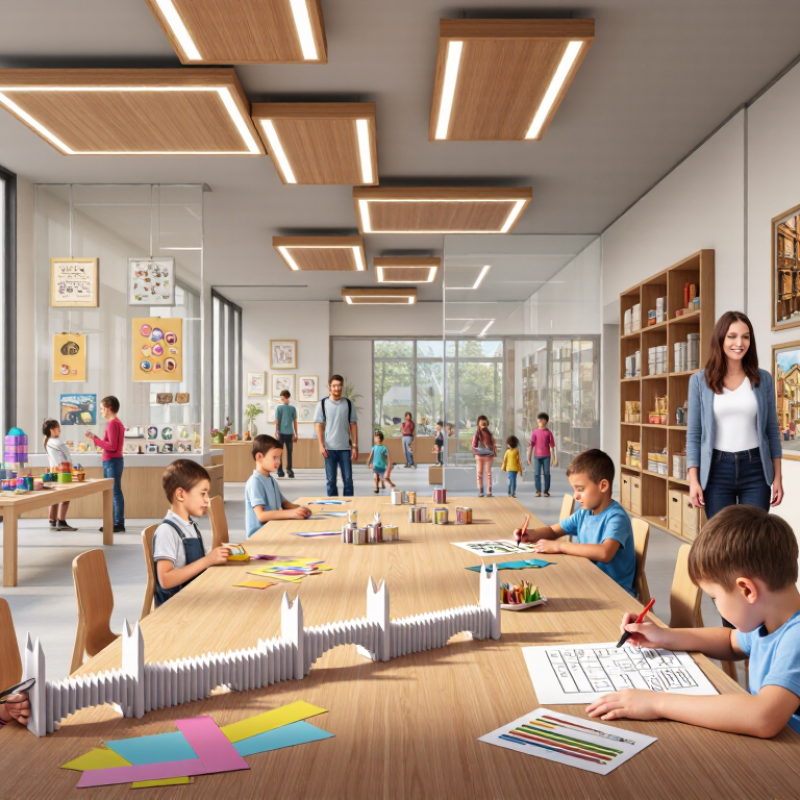
For families in China, promising places include public museums, children’s libraries, university outreach events, community art studios, nature centers, and school holiday workshops. Look for hands-on work: building a paper bridge, sketching a street market, or watching shadows move across a wall. Ask about language, age suitability, instructor experience, materials, and accessibility before booking. Some listings are promotional. A directory may also miss small local programs or outdated schedules. That limitation deserves attention. This guide offers practical starting points, while recognizing that local quality still takes a little checking.
Where to Find the Best Creative Learning Activities in China?

Define Creative Learning in China Through UNESCO’s 2024 Culture-and-Education Framework

UNESCO’s 2024 Framework for Culture and Arts Education treats culture as part of quality education, not an optional decoration. In China, that means creative learning can connect classroom work with local crafts, theatre, music, architecture, and community stories. A child might sketch roof patterns, ask why they differ, then build a paper model. The point is not a polished result. It is curiosity, making, discussion, and revision.

The OECD’s PISA 2022 creative-thinking assessment covered 64 countries and economies. It examined how 15-year-olds generate varied ideas and evaluate or improve them. That matters.

The World Economic Forum’s Future of Jobs Report 2023 also found that employers expect 44% of workers’ skills to be disrupted by 2027, with creative thinking among skills gaining importance. These reports support activities where learners explain choices, test ideas, and collaborate—not just follow instructions.

A collage can be beautiful, yet teach little if every child copies the same sample. That is easy to overlook.

Good programs need trained educators, accessible materials, and room for cultural differences. They also need reflection: whose stories are represented, and who gets to create?

Explore Museum Workshops: China Had 6,833 Museums in 2023 (NCHA)

China’s 6,833 museums in 2023, reported by the National Cultural Heritage Administration, offer families many places to learn by doing. Museum workshops can turn a gallery visit into a hands-on experience. Children might sketch a ceramic shape, fold a paper model, or study how an old tool was used. The best activities connect the making to objects on display.

Look for sessions that name the age range, language, duration, and materials before booking. A workshop with clay, ink, or simple building pieces can make an idea easier to remember. Ask whether children need to register and if adults should stay. Details vary between museums, and schedules may change during holidays. Check the museum’s current visitor information.

A large museum count does not mean every city has the same choice. Smaller local museums may offer fewer workshops, but their collections can feel close to everyday life. A guide explaining one object beside a child’s own drawing can be more memorable than a crowded activity room. Not every session will suit every learner. Some workshops move quickly, and younger children may need more time than the schedule allows. That is worth asking about.

Find Library-Based Activities: China Had 3,246 Public Libraries in 2023 (MCT)

China’s public libraries can be practical places to look for creative learning activities. The Ministry of Culture and Tourism reported 3,246 public libraries nationwide in 2023. That number suggests broad reach, but it does not mean every library offers the same programs. Some may host children’s reading sessions, paper crafts, or local-history activities; others may focus on quiet study and book borrowing.

Check a nearby library’s activity calendar before making plans. Look for age ranges, registration details, and whether materials are provided. A notice board near the entrance may list weekend workshops, while staff can explain how to join. Schedules can change, especially during school holidays. A quick call can save a long trip.

The setting itself can support learning: a shared table, a stack of picture books, and time to make something by hand. Parents can ask children what they noticed, rather than aiming for a perfect project. Not every activity will suit every child. And a library’s online listings may be incomplete, so it is worth checking in person.

Compare Maker, STEM, Heritage, and Nature Programs by Age and Access

Match an activity to a child’s age, patience, and travel radius—not just its label. For ages 4–7, nature walks, leaf sorting, clay, and simple building tasks suit shorter attention spans. Ages 8–12 can try beginner coding, circuits, model bridges, and heritage crafts with clear steps. Teenagers may prefer open-ended maker projects, robotics, oral-history interviews, or field ecology. Keep it simple. Ask whether children make, test, explain, and revise something, rather than watch a long demonstration. A neat timetable is not proof of learning; check sample projects and instructor feedback before paying.

Compare access as carefully as content. In major cities, museums, libraries, school clubs, and community centers may offer weekend sessions. Smaller cities may have fewer choices; a school club or local park may be more practical. Check class size, materials, transport, language, accessibility, and rain plans for outdoor activities. The World Economic Forum’s Future of Jobs Report 2025 identifies creative thinking as a skill expected to grow in importance. It does not prove that one class builds it. OECD’s PISA 2022 creative-thinking assessment tested 15-year-olds on generating, evaluating, and improving ideas. Use that as a useful lens, not a program ranking. Sometimes the best option is nearby, not impressive.

Where to Find Creative Learning Activities in China?

A practical age-and-access comparison of Maker, STEM, Heritage, and Nature programs

How to read this: Starting ages are broad planning estimates, not national averages or formal eligibility rules. Access describes common formats: nature activities can often use public outdoor spaces; heritage activities may be available through museums and local cultural sites; STEM activities usually need materials or facilitators; and Maker activities often benefit from tools, equipment, or a dedicated workspace. Check local age and safety requirements before booking.

Evaluate Program Quality Through Facilitator Expertise and Learner Outcomes

In China, creative learning activities may take place in community studios, museum workshops, or small after-school classrooms. A colorful room is not proof of strong teaching. Watch how facilitators introduce a task, respond to questions, and help learners make decisions. Do they explain unfamiliar tools clearly? Can they adapt when a child struggles with a paper mechanism or a group project falls behind? These details reveal more than polished photos.

Facilitator expertise includes subject knowledge, but also the ability to guide without taking over. Ask about staff training, lesson goals, and how activities suit different ages. Observe whether instructions are demonstrated in manageable steps and whether learners have time to experiment. Look closely. A good facilitator may ask, “What could you change?” instead of fixing the work for the learner. Still, one short visit cannot show everything; quiet learners may need time to participate.

Learner outcomes should be visible in both the finished work and the thinking behind it. Look for sketches, drafts, revised models, or short explanations of design choices. Ask how progress is recorded across several sessions, not just during a showcase. Useful evidence might include growing confidence with tools, clearer collaboration, or the ability to explain why a first idea failed. Not every outcome is easy to measure. A beautiful final piece can hide limited learning, while a rough prototype may show real problem-solving. Request examples, and compare them with the program’s stated goals.

Where to Find the Best Creative Learning Activities in China? - Evaluate Program Quality Through Facilitator Expertise and Learner Outcomes

Use this comparison template to assess programs through observable evidence. It does not assign unverified scores to providers; record results from program documents, class observations, and learner work.

Learning setting to explore Creative activity examples Facilitator expertise: evidence to check Learner outcomes: measurable indicators Where to verify or find programs Evidence to record
Museums and cultural institutions Object-based drawing, design challenges, exhibitions, and making activities linked to collections Relevant subject knowledge; experience leading age-appropriate discussions and hands-on sessions; ability to connect activities to collection materials Quality of completed work; learner ability to explain a design choice or interpretation; participation during discussion Institution education-program pages, public event calendars, and local cultural-service listings Facilitator biography; activity plan; anonymized learner work; observation notes
Public libraries and community learning spaces Storytelling, creative writing, craft sessions, reading-to-making projects, and collaborative displays Experience supporting varied reading levels; clear group facilitation; use of inclusive prompts and accessible materials Session attendance and completion; learner contributions to a story or project; participant feedback collected after the activity Library activity calendars, community notices, and local public-service websites Attendance count; sample activity materials; participant feedback form; examples of completed work
Maker and STEM learning spaces Prototyping, simple electronics, coding, model building, and iterative design challenges Demonstrated competence with tools and materials; safety procedures; ability to coach learners through testing and revision Prototype completion; number of documented test-and-revision cycles; learner explanation of how a solution works School or university outreach notices, public workshop schedules, and community education listings Safety briefing; project rubric; prototype photos; learner design notes
Arts and design workshops Visual art, music, drama, crafts, digital media, and collaborative design projects Relevant artistic practice or teaching experience; ability to demonstrate techniques and provide constructive feedback Learner portfolio samples; use of techniques introduced in class; ability to describe revisions and creative decisions Community arts-center schedules, cultural-center notices, and school-community activity announcements Facilitator work or teaching examples; learner portfolio; feedback criteria; observation notes
Nature and environmental education programs Field observation, nature journaling, habitat models, and evidence-based environmental projects Relevant environmental or science knowledge; field-safety preparation; ability to guide observation without supplying every answer Accuracy of recorded observations; learner questions supported by evidence; completion of a project or reflection Park and nature-education notices, public environmental-education listings, and school outreach announcements Risk and safety plan; field worksheet; learner journal entries; project or reflection samples
University and school outreach programs Research demonstrations, design projects, interdisciplinary challenges, and guided studio or lab activities Relevant academic or professional expertise; experience explaining concepts to the target age group; documented supervision and safety arrangements Pre- and post-activity responses to the same learning questions; project rubric results; learner ability to apply a concept to a new task Official school and university outreach pages, public lecture or workshop calendars, and education-office notices Program outline; facilitator role and qualifications; assessment questions; anonymized project results

How to compare programs: Ask for the same kinds of evidence from each provider. Review facilitator experience, observe a session where possible, and compare learner work or assessment results against the stated learning objectives. Attendance alone indicates participation, not learning.