Why Should Global Buyers Invest in Robotics for Classrooms?
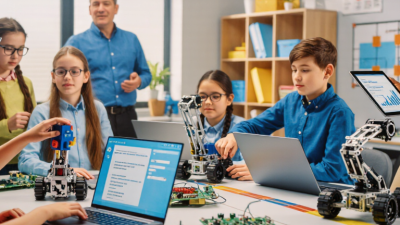
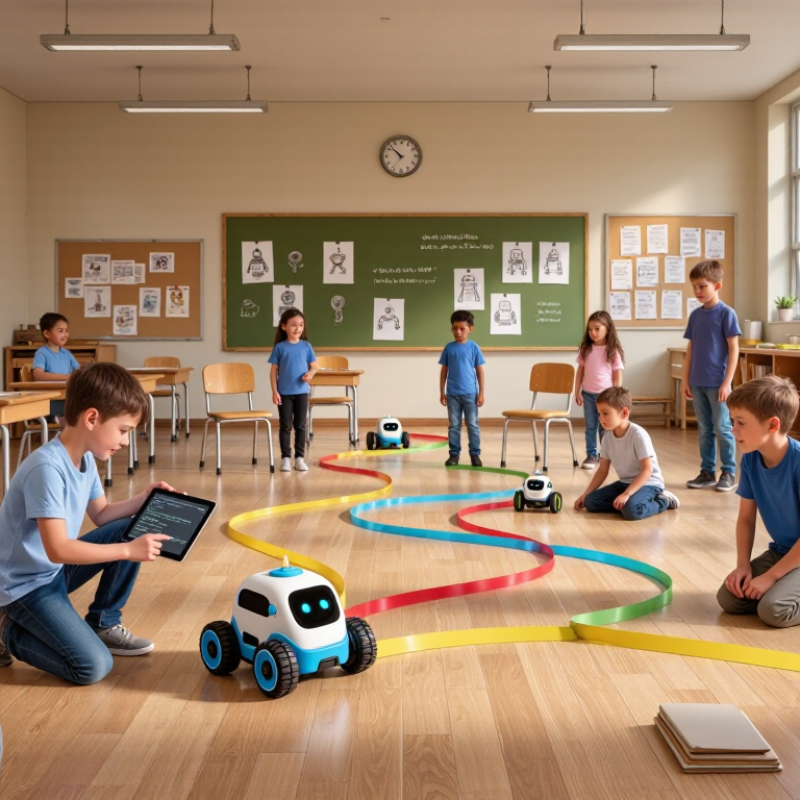
Robotics in classrooms is moving from science-fiction imagery to practical learning spaces. In a primary school, a small mobile robot can follow colored tape, avoid a chair, and invite students to test their code. These moments make abstract ideas visible. They also reveal mistakes quickly.
Global buyers should invest because robotics can strengthen programming, engineering, collaboration, and problem-solving skills. Seymour Papert, an educational technology pioneer and MIT professor, wrote, “The role of the teacher is to create the conditions for invention rather than provide ready-made knowledge.” His constructionist approach remains highly relevant. Robots give learners something physical to build, change, test, and explain. Teachers can observe learning through movement, debugging, and student discussion.
The investment, however, should not become a technology shopping exercise. Strong procurement requires teacher training, reliable support, accessible interfaces, safe materials, and clear curriculum links. Buyers should examine repair costs, software compatibility, data practices, and the availability of local-language resources. A robot that sits unused in a cupboard is not innovation. It is expensive storage.
Evidence also needs patience. Some classrooms may show immediate excitement, while deeper academic gains take longer to measure. Not every learner will enjoy robotics equally. Some students may need quieter roles, tactile alternatives, or additional guidance. That is an uncomfortable limitation, but ignoring it weakens the case. Global buyers can create better outcomes by funding people, maintenance, and evaluation alongside hardware. The smartest investment is not the most advanced robot. It is the one teachers can confidently use, students can meaningfully question, and schools can sustain.
Defining Classroom Robotics: Hardware, Software, and Learning Applications
Classroom robotics combines physical hardware, software, and learning applications. Hardware may include programmable robots, sensors, motors, building parts, and charging equipment. A small wheeled robot can detect a wall, change direction, and carry out a simple classroom challenge. These visible actions make abstract ideas easier to discuss.
Software gives the hardware instructions. It may use visual blocks, text-based coding, simulation tools, or teacher dashboards. Good software should support different ages, languages, and technical abilities. Learning applications connect robotics with science, mathematics, design, and problem-solving. Students might measure distance, test balance, or improve a delivery route. The activity matters more than the machine. A robot is not automatically a better lesson.
Global buyers should examine classroom evidence, not impressive demonstrations alone. Check safety controls, replacement parts, data protection, warranty terms, and offline functionality. Local teachers should be involved before large purchases. Their daily experience often reveals practical problems, such as limited storage or unreliable internet. Some pilots fail. That is useful information, although it can be uncomfortable.
Tips: Start with a small, measurable pilot. Define one learning goal, such as accurate measurement or logical sequencing. Observe how students collaborate, troubleshoot, and explain their decisions. Compare results across different ages and learning needs. Leave room for mistakes. A perfect first design is unlikely. Review the program after several lessons, then adjust equipment, training, or teaching time before expanding.
Why Should Global Buyers Invest in Robotics for Classrooms?
Classroom robotics combines programmable hardware, software tools, and learning applications. Strong digital connectivity is an important foundation for deploying robotics at scale, enabling cloud resources, teacher dashboards, coding platforms, and collaborative project work.
The chart shows the estimated global share of schools connected to the internet for pedagogical purposes by education level. Higher connectivity in secondary education supports more advanced robotics activities, while primary schools represent a significant opportunity for investment in offline-capable kits, teacher training, and age-appropriate programming applications.
Source: UNESCO Global Education Monitoring Report 2023, “Technology in education: A tool on whose terms?” Figures are rounded global estimates.
Industry Demand Signal: 541,302 Robots Installed Worldwide in 2023 (IFR)
Why Should Global Buyers Invest in Robotics for Classrooms?
The global robotics market is sending a clear demand signal. The International Federation of Robotics reported 541,302 industrial robots installed worldwide in 2023. This figure does not represent classroom robots directly. However, it shows stronger supplier capacity, wider technical skills, and falling barriers to automation. For education buyers, that matters. More mature robotics ecosystems can support safer hardware, better maintenance, and improved teacher training.
Classroom robotics can turn abstract lessons into visible action. Students may program a sensor, test a moving mechanism, then revise the design after failure. That experience builds problem-solving and technical confidence. UNESCO’s 2023 Global Education Monitoring Report stresses that technology should serve clear learning goals, not replace sound teaching. Buyers should therefore examine evidence from pilots, lesson outcomes, and teacher feedback. Installation numbers alone are not proof of educational value.
Tips:
Start with a small, curriculum-linked pilot. Check repair access, battery life, accessibility, data protection, and offline operation. Train teachers before expanding. A robot can become an expensive prop. That risk is real. Ask students what they actually learned, not only whether they enjoyed the demonstration. Compare total ownership costs over three years, including replacement parts and staff time. The best purchase may be less impressive, but more reliable.
Workforce Readiness: 44% of Job Skills May Change by 2027 (WEF)
Global buyers should view classroom robotics as workforce infrastructure, not a decorative technology purchase. The World Economic Forum’s Future of Jobs Report 2023 estimates that 44% of core job skills may change by 2027. It also reports that six in ten workers will need training before then. Students need more than technical vocabulary. They need practice adapting when a sensor fails, instructions conflict, or a team misses its deadline.
A well-designed robotics lesson creates this pressure safely. Students can build a small vehicle, test its movement, record errors, and revise the code. This mirrors real engineering work. It also develops problem-solving, communication, and systems thinking. The International Federation of Robotics reported 553,052 industrial robots were installed worldwide in 2022. That figure signals a changing workplace, although classroom robots cannot reproduce every industrial condition.
The investment still requires restraint. More equipment does not guarantee better learning. UNESCO’s Global Education Monitoring Report 2023 warns that technology should support teachers, not replace human interaction. Buyers should examine lesson quality, teacher training, repair access, and measurable learning outcomes. Cheap kits may create short demonstrations but weak long-term skills. That is uncomfortable. Yet ignoring maintenance costs and uneven teacher confidence can make an ambitious program disappointingly fragile.
Learning Benefits: Robotics Strengthens STEM, Coding, and Problem-Solving Skills
Why Should Global Buyers Invest in Robotics for Classrooms?
Robotics gives STEM learning a physical shape. Students wire sensors, test code, and watch a small motor respond. This makes abstract ideas easier to discuss and revise. The World Economic Forum’s Future of Jobs Report 2023 found that 44% of workers’ core skills may change by 2027. It also reported that six in ten workers will need training before then. Classroom robotics helps students practise analytical thinking, coding, teamwork, and creative problem-solving before these skills become workplace requirements.
The learning process includes useful failure. A robot may turn too early, miss a line, or stop beside the target. Students must inspect the code, measure the result, and change one variable. That routine builds evidence-based reasoning. In group projects, one learner can design the structure while another checks the program. A third can record test results. The International Federation of Robotics reported 553,052 industrial robots were installed worldwide in 2022, a 5% annual increase. Students therefore encounter skills connected to a growing technical environment.
However, robotics is not automatically effective.
UNESCO’s 2023 Global Education Monitoring Report noted that technology’s educational impact depends on appropriate use, teacher support, and local conditions. Some kits are too complex for beginners. Others offer impressive movement but limited reflection. Buyers should assess lesson quality, teacher training, repair access, and accessibility, not only hardware specifications. A classroom should include notebooks, discussion, and unplugged problem-solving too. More equipment does not always mean deeper learning.
Global Investment Criteria: ROI, Safety, Curriculum Fit, and Teacher Training
Why Should Global Buyers Invest in Robotics for Classrooms?
Global buyers should treat classroom robotics as an education investment, not a technology purchase.
Return on investment needs measurable evidence. The Education Endowment Foundation’s Teaching and Learning Toolkit associates digital technology with four additional months of progress, while collaborative learning reaches five months. These figures are useful benchmarks, not guaranteed results. A robot cannot repair weak lesson planning.
Buyers should calculate cost per learner, annual maintenance, teacher hours, and equipment utilization.
A practical pilot might track programming accuracy, teamwork, attendance, and teacher workload across one term.
Curriculum fit matters equally. Each activity should connect with science, mathematics, coding, or problem-solving standards. It should also support local languages, accessibility needs, and different classroom sizes. Some imported content may look impressive but feel culturally distant.
Safety requires more than emergency buttons.
Schools need speed limits, controlled movement zones, transparent data policies, and documented maintenance checks. UNESCO’s 2023 Global Education Monitoring Report found that only 16% of countries explicitly guarantee data privacy in education by law. That gap deserves attention.
Teacher training is another purchasing criterion.
OECD TALIS 2018 reported that 18% of teachers had a high need for ICT training. Training should include lesson design, troubleshooting, safeguarding, and responsible data use. Short workshops are rarely enough. Teachers need practice with real students, including failed activities. That is where the honest evidence begins.