BirdBrain is part of the CreXo family of brands!
Learn MoreBirdBrain is part of the CreXo family of brands!
Learn MoreGlobal buyers no longer judge industrial technology by brochures alone. They want proof that equipment can perform under real production pressure. Hands on programming provides that proof. Engineers can adjust a robot path, test a sensor response, and diagnose a fault beside the machine. These moments reveal practical capability faster than polished demonstrations.
The International Federation of Robotics reported 541,302 industrial robots installed worldwide in 2023. More than 4.28 million robots were operating globally. Each system depends on reliable programming, skilled integration, and responsive maintenance. A buyer therefore evaluates more than hardware. They assess whether suppliers can transfer knowledge, adapt control logic, and support local teams after installation. The World Economic Forum’s Future of Jobs Report 2025 estimates that 39% of workers’ existing skills may change or become outdated by 2030. Technical literacy is becoming a commercial requirement, not an optional advantage.
This matters across borders. A factory in Germany may need precise cycle-time control, while a plant in Vietnam may prioritize easier troubleshooting and operator training. Hands on programming connects those needs to measurable results. It can reduce commissioning delays and expose integration risks early. It also creates trust because buyers can see how decisions are made.
Still, hands-on expertise is not a guarantee of success. Poor documentation, inconsistent coding, or limited language support can weaken an otherwise strong project. That gap deserves attention. Global suppliers must combine practical programming experience with clear standards, cybersecurity awareness, and dependable after-sales support. The strongest buyers are not purchasing code alone. They are purchasing confidence that the system will keep working when conditions become less predictable.
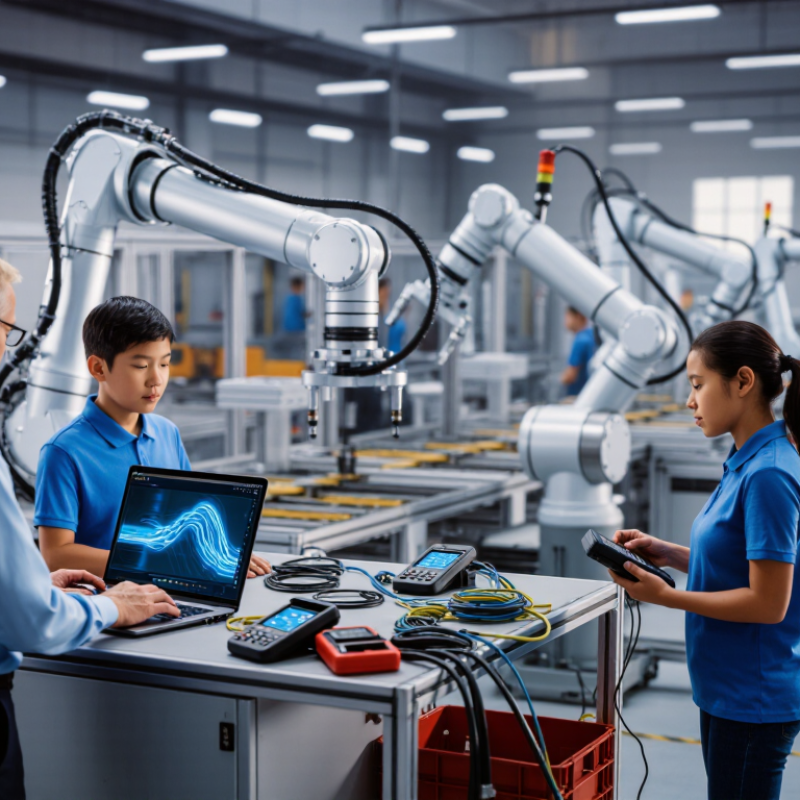
Hands-on programming means creating, testing, and adjusting control logic in a real automation environment. Under IEC 61131-3, this work commonly uses Structured Text, Ladder Diagram, Function Block Diagram, and Sequential Function Chart. Each language supports different tasks. Ladder logic can clarify a safety interlock. Structured Text can handle calculations and repeated operations. The practical scope includes program structure, variable handling, diagnostics, motion sequences, and operator interaction.
Global buyers need to assess more than a controller’s specifications. They should examine how clearly engineers document logic, name variables, and manage version changes. A useful evaluation may include a small conveyor sequence, an alarm reset, and a simulated sensor failure. These details reveal whether programming remains understandable during commissioning. They also show how quickly local technicians can troubleshoot unfamiliar code. This matters when support teams work across languages, time zones, and training levels.
Experience often exposes the weak points. A program may run correctly in a demonstration yet become confusing after one late change. That is not a minor issue. Buyers should request readable comments, test records, recovery procedures, and evidence of fault handling. IEC 61131-3 provides a recognized programming framework, but it does not guarantee quality by itself. Engineering discipline still decides the result. I have found that elegant code can fail operationally when maintenance staff cannot interpret it. That uncomfortable gap deserves attention.
Global buyers are no longer purchasing machines alone. They are purchasing predictable production, traceable data, and faster local support. Hands-on programming connects these promises to the factory floor. A programmer adjusts robot paths, tests sensor timing, and checks recovery after network interruptions. These details expose risks that brochures rarely show. They also create evidence buyers can inspect before signing.
A 2023 Smart Manufacturing Survey reported that 86% of manufacturers viewed smart manufacturing as a major competitiveness driver. The World Robotics 2023 report recorded 553,052 industrial robots installed worldwide in 2022. More automation means more software decisions. It also creates more opportunities for poorly tested logic.
Global buyers ask about cycle-time stability, changeover settings, alarm histories, and operator training. A polished demonstration helps. A repeatable program matters more. One weakness remains: practical knowledge can stay inside one programmer’s memory. That is risky. If this person leaves, critical decisions may disappear.
Tips: Build a small test cell before deployment. Record every parameter change. Simulate sensor failure and safe recovery. Let operators run the sequence, not only engineers. Keep version numbers, screenshots, and measured cycle times. Avoid claiming “fully automated” when manual intervention remains. This honesty may feel uncomfortable. It can still build trust. Pair hands-on expertise with documentation, remote diagnostics, and local training.
Global buyers increasingly inspect how products are built, not only what they cost. A supplier’s team may need to read a script, test a sensor, or adjust a production parameter. That is practical trust. Hands-on programming shows whether technical claims work beyond a presentation. It also helps teams detect errors early, especially when specifications cross languages, time zones, and production sites.
The World Economic Forum’s Future of Jobs Report 2023 says 44% of workers’ core skills are expected to change by 2027. It does not mean 44% of people will lose jobs. This distinction matters. The same report says six in ten workers will need training before 2027, while only about half may have adequate access. Practical coding exercises can expose gaps faster than written tests. A worker who can modify a data check understands more than syntax.
The OECD Employment Outlook 2023 places about 27% of employment in OECD countries in occupations at high risk of automation. Meanwhile, the International Labour Organization’s 2023 analysis finds one in four workers globally have some exposure to generative AI. These figures do not prove that automation will replace everyone. They do show why reskilling cannot remain theoretical. In real evaluations, small failures matter. A script may crash during a live inspection. A sensor may return an impossible value. Learning to diagnose those moments builds credibility, although training programs still often underestimate the frustration involved.
Global buyers rarely fear code itself. They fear silent failures between systems, suppliers, and time zones. Practical programming reduces that uncertainty by testing real interfaces before production begins.
A working prototype should send actual purchase orders, inventory updates, and shipment events. Engineers can inspect payloads, validate units, and test missing fields. Retry logic matters. So do idempotency keys, timestamps, and clear error messages. A clean demo can still fail under delayed responses. This is where hands-on coding exposes integration risk early. The World Bank’s 2023 Logistics Performance Index assessed 139 economies and highlighted wide differences in tracking, customs, and delivery reliability. Software must handle those differences, not assume perfect infrastructure.
Resilience requires evidence, not promises. McKinsey’s 2023 global supply-chain survey found that about nine in ten leaders invested in resilience during the previous year. Buyers therefore expect measurable controls. A practical coding review can record test results, response times, rejected transactions, and recovery steps. Small sandbox tests help teams compare supplier systems before contracts become difficult to change. They also reveal uncomfortable gaps. Our test plan may overlook a regional holiday, a decimal conversion, or a supplier’s older interface. That is not failure. It is useful evidence. Teams should document the gap, assign ownership, and retest it with realistic data.
Reference: World Bank, Logistics Performance Index 2023; McKinsey, Global Supply Chain Risk and Resilience Survey 2023.
Why Hands-On Programming Matters to Global Buyers
Global buyers need more than a successful demonstration. They need measurable operating evidence. Hands-on programming reveals how a system handles recipe changes, alarms, sensor faults, and recovery steps. These details directly influence uptime and cycle time after installation.
ISO 22400 provides a useful structure for comparing production performance. Uptime should reflect planned production time minus recorded downtime. Cycle time should be measured against the defined ideal or target cycle, not a sales estimate. During a practical trial, buyers can inspect timestamps, stop reasons, restart delays, and output quality. Small delays matter. A six-second recovery loss may repeat thousands of times each month.
TCO requires a wider view. Purchase cost is only the visible part. Buyers should calculate integration labor, programming changes, energy use, spare parts, training, maintenance, and lost production. Hands-on programming exposes these future costs early. It also shows whether local engineers can adjust logic without waiting for remote support. That capability may protect uptime across different time zones.
The uncomfortable truth is that early TCO models are often incomplete. They may ignore troubleshooting time or operator learning curves. A reliable assessment should record assumptions and revise them after factory trials. Clear data definitions make comparisons fairer across sites, countries, and production volumes. The numbers become more credible when operators can reproduce them.
Buyer value can be evaluated through measurable production KPIs aligned with the ISO 22400 framework: uptime, cycle time, and total cost of ownership.
The benchmark compares a standard commissioning approach with hands-on programming support. Uptime is shown as a percentage, cycle time in seconds per unit, and TCO as an index where 100 represents the baseline cost. Higher uptime and lower cycle time and TCO indicate stronger buyer value.
To provide the best experiences, we use cookies to store and/or access device information. Consenting to these technologies will allow us to process data such as browsing behavior or unique IDs on this site. Not consenting or withdrawing consent, may adversely affect certain features and functions.