
What Are 2026 Top Robotics Curriculum Integration Types?
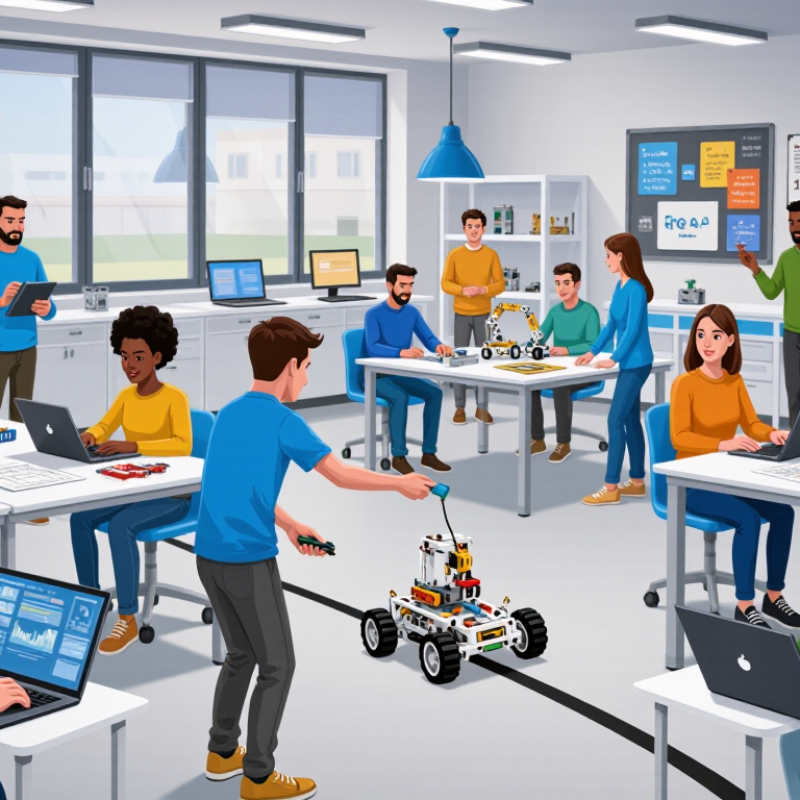
Robotics curriculum integration is becoming a practical priority for schools preparing learners for technical, creative, and human-centered work in 2026. It connects coding, electronics, engineering, mathematics, science, and communication through purposeful classroom activities. A student may program a small rover to follow a black line, measure its turning errors, and explain the design choices in a team report. These experiences make abstract concepts visible.
This guide examines the leading integration types expected to shape robotics education in 2026. They include subject-based integration, project-based learning, interdisciplinary STEM models, vocational pathways, and simulation-supported instruction. Each approach offers different benefits. A project model can strengthen collaboration, while subject integration may provide clearer assessment and stronger curriculum alignment. Vocational programs can reflect workplace tools, but they may require costly equipment and specialist teachers.
No model fits every school.
Reliable implementation depends on teacher preparation, age-appropriate hardware, documented learning outcomes, and consistent safety procedures. Evidence should come from classroom performance, student reflection, prototype testing, and transparent assessment rather than impressive demonstrations alone. A robot that moves across a table is not automatically meaningful learning. It might hide weak reasoning.
The discussion also considers accessibility, maintenance, digital equity, and responsible use of artificial intelligence. These factors are easy to overlook during early planning. Schools should test small units, review student results, and revise activities before expanding them. That process is slower, but usually more trustworthy. Some categories may overlap, and the boundaries will remain imperfect. Recognizing that uncertainty can help educators choose integration models based on real learners, available resources, and measurable educational goals.
Defining Robotics Curriculum Integration in 2026
Defining robotics curriculum integration in 2026 means more than adding robots to a technology lesson. It means using robotic systems to teach concepts, skills, and responsible decision-making across subjects. The International Federation of Robotics reported 541,302 industrial robot installations in 2023. That workforce shift matters in classrooms. Students now need mechanical reasoning, coding fluency, teamwork, and ethical judgment.
The leading integration types are interdisciplinary projects, dedicated robotics courses, maker-based learning, and career-focused technical pathways. In an interdisciplinary unit, students might build a sensor-guided greenhouse model. They measure humidity in science, calculate energy use in mathematics, and explain automation choices in language lessons. Dedicated courses provide deeper programming practice. Maker projects encourage rapid testing, visible failure, and repair. Career pathways connect classroom tasks with maintenance, safety, system design, and data analysis. The World Economic Forum’s Future of Jobs Report 2025 states that 58% of employers expect robotics and automation to transform business by 2030.
Effective integration also requires assessment beyond whether a machine moves. Teachers should evaluate debugging notes, design decisions, collaboration, accessibility, and safe operation. A working prototype can still show weak learning. That is uncomfortable. Some projects become expensive demonstrations with little reflection. Schools may also overvalue speed and technical polish. Better curriculum design leaves space for imperfect builds, student questioning, and evidence-based revision. Small robots on a classroom table can reveal large gaps in planning.
| Integration Type | Core Definition | Primary Curriculum Connections | Typical Learner Stage | Core Learning Outcomes | Recommended Learning Activities | Assessment Evidence | Typical Implementation Intensity |
|---|---|---|---|---|---|---|---|
| Dedicated Robotics Course | A structured subject or module in which robotics is the main learning focus, covering mechanical systems, electronics, control, programming, and design. | Engineering Computer Science Physics | Upper primary through higher education | System design, programming logic, sensor use, actuator control, troubleshooting, and technical documentation. | Build-and-test sequences, sensor challenges, control-system exercises, and an end-of-module prototype. | Working prototype, source code, design journal, test data, and technical presentation. | High: commonly scheduled as a weekly course or semester module. |
| Interdisciplinary STEM Integration | Robotics is used as a practical context for teaching concepts from two or more STEM subjects within one learning sequence. | Mathematics Science Technology Engineering | Primary through secondary education | Application of measurement, forces, energy, geometry, data analysis, algorithms, and engineering constraints. | Distance and speed calculations, structure testing, environmental sensing, and iterative design tasks. | Experiment records, calculations, design iterations, performance measurements, and group explanations. | Medium to high: integrated into a unit, term, or cross-subject project. |
| Project-Based Robotics Learning | Learners address an open-ended problem by researching, designing, constructing, programming, testing, and improving a robotic solution. | STEM Design Language Civics | Primary through higher education | Problem definition, collaboration, creativity, project planning, resilience, communication, and evidence-based improvement. | Needs analysis, prototype cycles, user feedback, performance trials, and public demonstrations. | Project portfolio, rubric-based prototype assessment, reflection, peer review, and presentation. | High: generally requires several lessons or a multi-week project window. |
| Computational Thinking and Coding Integration | Robotics provides a physical environment for learning algorithms, sequencing, decomposition, debugging, data, and automated decision-making. | Computer Science Mathematics Digital Literacy | Early primary through higher education | Algorithm design, variables, conditionals, loops, functions, debugging, abstraction, and interpretation of sensor data. | Path planning, obstacle response, line or light detection, sensor calibration, and code optimization. | Program functionality, code quality, debugging records, algorithm explanations, and test-case results. | Low to high: can be delivered through short activities or a full programming course. |
| Design, Manufacturing, and Engineering Integration | Robotics is taught as a complete engineering process that connects user needs, materials, mechanisms, electronics, fabrication, and testing. | Design Technology Engineering Materials Electronics | Lower secondary through higher education | Requirements analysis, mechanical design, safe fabrication, circuit integration, tolerance awareness, and reliability testing. | Concept sketches, computer-aided design, mechanism comparisons, fabrication, assembly, and load testing. | Engineering drawings, bill of materials, safety checklist, prototype performance, and design-for-improvement report. | High: requires specialist equipment, preparation time, and supervised practical work. |
| Challenge- and Competition-Based Integration | Robotics learning is organized around defined performance challenges that encourage rapid iteration, strategy, teamwork, and measurable results. | STEM Physical Education Communication Teamwork | Upper primary through higher education | Optimization, strategic planning, time management, collaboration, safe operation, and performance analysis. | Timed navigation, object-handling tasks, reliability trials, rule interpretation, and strategy reviews. | Challenge score, reliability rate, design log, teamwork evidence, and post-challenge analysis. | Medium to high: suitable for clubs, enrichment programs, or concentrated challenge periods. |
| Social, Ethical, and Human-Centered Robotics | Robotics is connected to human needs, social impact, accessibility, privacy, safety, sustainability, and responsible technology decisions. | Civics Ethics Social Science Design | Secondary education through higher education | Stakeholder analysis, ethical reasoning, inclusive design, risk assessment, communication, and responsible innovation. | Community interviews, needs-based design briefs, accessibility audits, risk scenarios, and impact assessments. | Design rationale, stakeholder feedback, ethical analysis, risk register, and inclusive-use evaluation. | Medium: can be integrated into a project, debate, case study, or design review. |
| Career and Technical Education Integration | Robotics is aligned with workplace practices and technical pathways, emphasizing practical competence, safety, maintenance, and system operation. | Automation Electromechanics Workplace Safety Technical Mathematics | Upper secondary, vocational, and post-secondary education | Installation, calibration, fault diagnosis, preventive maintenance, technical reading, and process documentation. | Wiring and inspection exercises, troubleshooting scenarios, calibration tasks, maintenance schedules, and process simulations. | Practical skills demonstration, service record, safety performance, fault-finding procedure, and competency checklist. | High: benefits from dedicated laboratories, structured practice, and supervised assessment. |
| Inclusive and Assistive Robotics Integration | Robotics is adapted to provide varied entry points for learners and to explore technologies that support participation, communication, mobility, or independent living. | Special Education Health Studies Design Human Development | All learner stages, with age-appropriate adaptation | Accessible problem-solving, communication, collaboration, user-centered design, fine-motor development, and self-efficacy. | Multi-modal controls, simplified coding pathways, cooperative roles, assistive-device concepts, and user testing. | Individual progress evidence, accessible prototype, user feedback, participation record, and reflective assessment. | Variable: depends on learner needs, accessibility requirements, and available support. |
| Sustainability and Environmental Robotics | Robotics is used to investigate environmental monitoring, resource efficiency, waste reduction, conservation, and sustainable system design. | Environmental Science Geography Engineering Data Science | Primary through higher education | Systems thinking, data collection, energy awareness, environmental measurement, lifecycle thinking, and evidence-based decisions. | Temperature or light monitoring, sorting and collection concepts, energy-use comparisons, and field-data interpretation. | Sensor dataset, sustainability impact calculation, prototype evaluation, research report, and improvement proposal. | Medium to high: works as a unit, field project, or extended interdisciplinary investigation. |
Data note: The categories describe established curriculum integration models. Implementation intensity varies according to learner age, timetable, educator expertise, equipment access, safety requirements, and local curriculum standards.
Related Posts
-
Top 10 Benefits of Learning Through Robotics for Kids?
-
Top Robotics Education Resources for Future Innovators?
-
Why is K12 Robotics Education Essential for Future Skills?
-
Top Student Engagement Strategies to Boost Learning Outcomes?
-
How to Implement Technology Enhanced Learning in Your Classroom?
-
20 Hands on STEM Projects Kids Will Love to Try?