BirdBrain is part of the CreXo family of brands!
Learn MoreBirdBrain is part of the CreXo family of brands!
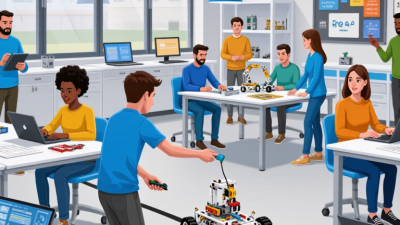
Learn MoreMaker education programs in China vary widely in purpose, teaching style, and access to equipment. Some focus on robotics and coding; others invite students to build cardboard prototypes, test simple circuits, or redesign everyday objects. The “best” program is not always the one with the newest machines. It may be the one where learners can explain why a design failed, revise it, and try again. Small details matter. Are tools suitable for the students’ ages? Do instructors guide projects without taking over? Can learners show what they made and describe their choices?
This overview considers programs through practical indicators: project-based learning, instructor expertise, safety practices, equipment access, and the support offered to different ages and skill levels. It also considers whether activities connect making with science, engineering, art, or local community needs. Program descriptions can change, and a polished website does not prove that every class delivers the same experience. Families and educators should check current schedules, costs, class sizes, and examples of student work before enrolling. A visit or conversation with an instructor can reveal more than a brochure. There is no perfect checklist, either; a quiet workshop may suit one learner and frustrate another. The strongest options are those that make experimentation purposeful, welcoming, and visible, while leaving room for curiosity—and for a few imperfect first attempts.
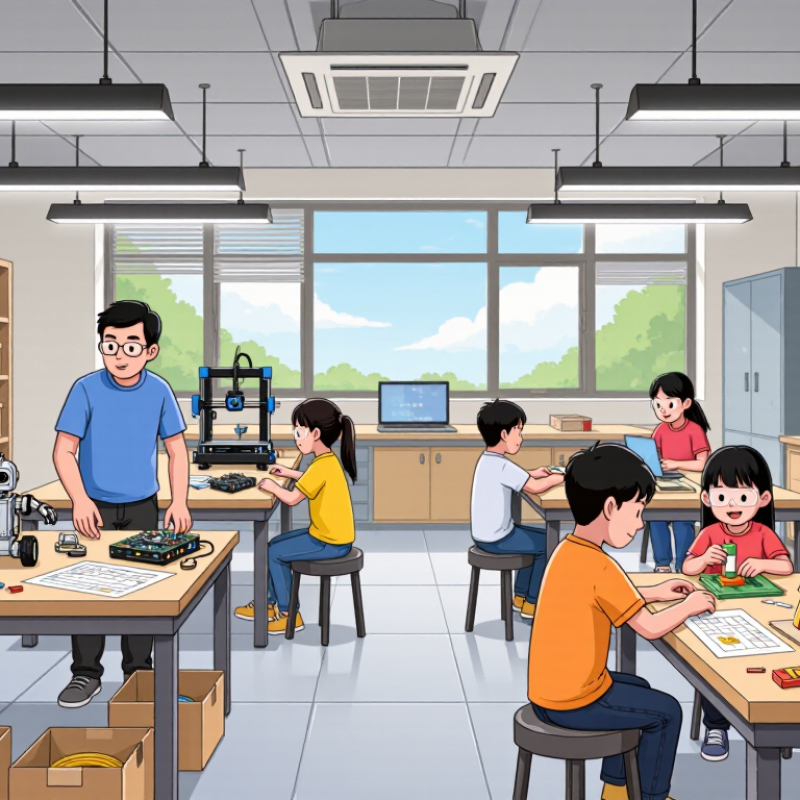
Maker education programs in China aim to help students turn ideas into working objects, not just memorize technical terms.
Lessons often combine science, design, basic coding, and hands-on problem-solving. A student might build a small sensor that measures classroom light, then adjust its position after comparing readings. Cardboard models, simple circuits, and recycled materials can make abstract concepts easier to test.
Small tests matter. Students learn to plan, observe, and explain why a design works—or does not.
These programs also teach collaboration. Teams may divide tasks, share tools, and negotiate changes when a prototype wobbles or a circuit fails. Teachers can guide questions without providing every answer, while asking students to record sketches, measurements, and revisions. That process builds communication and practical confidence alongside technical skills.
The results are not always impressive. Some projects remain unfinished, and group work can feel uneven. Those moments still offer useful lessons, especially when students discuss what they would change next time. A strong program values that honest reflection as much as a polished final model.
Maker education in China is not organized through one national model. Its shape often depends on local education priorities, school budgets, and available workshop space. In some cities, schools connect science, technology, engineering, arts, and mathematics through project periods. Elsewhere, maker work may sit inside technology classes or after-school clubs. The difference matters. Tools alone do not create a program.
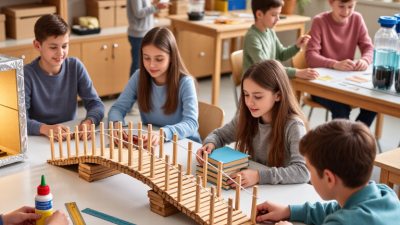
A typical setup may include a teacher facilitator, a shared room, and rotating student teams. Learners might build a cardboard bridge, test its load with small weights, then revise the supports. Some schools also work with universities, libraries, or community learning spaces for equipment and mentoring. Partnerships can widen access, but they need clear roles and steady scheduling. Otherwise, a promising workshop becomes an occasional event.
Strong programs make room for planning, testing, and explaining, not just finished models. Teachers can assess sketches, trial notes, teamwork, and how students respond when a design fails. Access remains uneven: rural schools may face fewer materials, trained mentors, or maintenance support. Even urban programs can overvalue polished displays. That is worth questioning. A reliable program treats mistakes as evidence while keeping projects tied to classroom learning and local needs.
In China, maker education appears in several kinds of institutions, and each offers a different learning environment. Primary and secondary schools may run maker classes, project weeks, or after-school clubs. Students might build a paper bridge, program a small robot, or test why a simple circuit fails. These activities work best when learners have time to revise their designs, not just display a finished product.
Universities and vocational colleges often provide workshops with tools, technical mentors, and links to engineering projects. Science museums, public libraries, and community centers can make hands-on learning more accessible through short sessions and shared equipment. Independent education studios may offer longer courses, though families should check instructor experience, class size, safety routines, and whether projects suit a child’s age. A busy room with soldering stations or 3D printers needs close supervision. Access also varies: not every school or community has the same equipment. The picture is not always tidy. Some programs focus heavily on impressive devices, while giving little time to explain mistakes. A useful question is whether learners can describe what they tested, what failed, and what they would change next.
A qualitative overview of the typical role each institution type can play. Scores are illustrative, not measured participation or market-share data.
Schools and universities can integrate making into formal learning, while science museums, youth activity centers, and independent learning providers can offer workshops or project-based activities. Offerings vary by location and institution.
Comparing China’s maker education programs means looking beyond polished project photos. A well-equipped room helps, but the teaching routine matters more. Ask how often learners design, build, test, and revise instead of simply copying a finished model. Watch a class if possible. Do students explain why a bridge bends, or only decorate it?
Check the curriculum and instructor preparation. Strong programs connect coding, electronics, materials, and design through age-appropriate challenges. Ask to see student projects from different levels and learn how teachers respond when prototypes fail. Failure should lead to another test, not an instant adult fix. That matters. Compare class size, tool access, safety procedures, and hands-on time. A low fee may not include materials, so clarify the full cost.
Look for dated project portfolios, clear learning goals, and feedback about problem-solving rather than broad claims of creativity. Ask how progress is assessed and whether children can explain their design choices. A polished showcase can hide uneven learning. Visit more than once, and talk with families whose children have attended for a term. One visit is never enough. No checklist is perfect; classroom chemistry is difficult to judge on paper, and the right pace can vary widely between learners.
| Program Model | Typical Learners | Learning Format | Common Activities | How Learning Is Assessed | Best Fit | Points to Check |
|---|---|---|---|---|---|---|
| School-Based Maker Curriculum | Primary and secondary school students; content is usually adapted by grade level. | Lessons integrated into school timetables, electives, or project periods. | Design challenges, prototyping, basic electronics, coding, and collaborative problem-solving. | Project documentation, demonstrations, design revisions, and teacher feedback. | Schools seeking a recurring, curriculum-connected experience for a whole class or cohort. | Ask about lesson frequency, teacher preparation, equipment access, and how projects connect to existing subjects. |
| After-School Maker Lab | Often aimed at primary and secondary students, with groups organized by age or experience. | Instructor-led sessions outside regular school hours; may be offered as short courses or ongoing clubs. | Hands-on work with craft materials, simple machines, robotics, digital fabrication, or programming. | Completed prototypes, practical demonstrations, and participation in the build-and-test process. | Learners who want more workshop time and a smaller-group setting beyond regular classes. | Check supervision, class size, tool safety, materials included, and whether students get time to iterate on designs. |
| Competition- or Challenge-Based Program | Students who enjoy goal-oriented projects; entry requirements and age groups depend on the event or course. | Preparation sessions followed by a defined challenge, showcase, or competition. | Team design, coding, robotics, testing, presentation, and responding to a project brief. | Usually based on stated challenge criteria such as functionality, design process, teamwork, or presentation. | Learners motivated by milestones, public demonstrations, and structured team goals. | Review the judging criteria and workload; confirm that learning and iteration matter alongside the final result. |
| Online or Hybrid Maker Course | Students with reliable access to a device and, for practical projects, suitable materials and adult support where needed. | Online instruction, sometimes combined with in-person workshops or mailed project materials. | Computer-aided design, coding, digital simulations, and guided projects using available household or classroom materials. | Submitted project files, videos, code, or instructor feedback; assessment methods vary by course. | Learners who need flexible scheduling or live outside convenient reach of a physical workshop. | Check which tools and materials are required, how students receive feedback, and which activities require hands-on supervision. |
| Community or Museum Workshop | Families, school groups, and learners across a range of ages, depending on the workshop. | Short, facilitated sessions in a shared learning space. | One-off design activities, creative reuse, simple engineering builds, and introductory technology projects. | Usually informal: participants explain, demonstrate, or take home what they have made. | First-time learners or families looking for a low-commitment introduction to making. | Confirm age suitability, session length, accessibility, group size, and whether the activity allows meaningful independent choices. |
Comparison is by program model, not by provider ranking. Age ranges, schedules, tools, and assessment practices vary by school, course, and location; verify current details directly before enrolling.
Choosing a maker program in China starts with the work students will actually do. Ask to see a recent project, not only polished photos: a cardboard mechanism, a simple sensor, or a prototype revised after testing. The World Economic Forum’s Future of Jobs Report 2023 found that employers expect 44% of workers’ skills to change by 2027, and identified creative thinking as a growing skill. That is useful context, not proof that any particular class delivers results. Look for lessons that connect design, science, and iteration, with clear learning goals and time to explain failed attempts.
Check how mentors guide students. Do they ask questions, or complete difficult steps for them? Ask about mentor training, student-to-teacher ratios, equipment supervision, and how younger learners use tools. A well-equipped room is not enough. Watch the room. Are students sharing materials, documenting changes, and explaining why a design works? Request examples of student work at different stages, plus a sample assessment rubric. If every project looks identical, creativity may have limited space.
Practical fit matters too. Confirm the program’s language of instruction, class schedule, age range, and total costs, including materials. For younger children, ask how activities balance open exploration with structure; for older students, check whether projects involve genuine testing rather than decoration alone. A short trial class can reveal more than a brochure. Still, one visit is a small sample, and a lively showcase does not guarantee consistent teaching. That uncertainty is worth discussing with the provider.
To provide the best experiences, we use cookies to store and/or access device information. Consenting to these technologies will allow us to process data such as browsing behavior or unique IDs on this site. Not consenting or withdrawing consent, may adversely affect certain features and functions.